Noma, the Copenhagen restaurant that held the No. 1 spot on the World’s 50 Best Restaurants list in 2010, 2011, 2012, 2014, and 2016, announced its permanent closure in January 2023. During two decades of operation, it sourced every ingredient on the menu with the same obsessive specificity: the origin mattered, the processing method mattered, and how the ingredient got from its natural environment to the plate was as important as what happened to it in the kitchen. The coffee that Noma served was chosen on the same terms. That attitude — that coffee is an ingredient as worthy of attention as any other — has become the baseline for serious culinary culture, and it shapes exactly what makes wild kopi luwak the right gift for the chef, the serious food writer, or the committed home cook who has already found everything good within their usual reach.
The argument for kopi luwak in this context isn’t about luxury signaling. It’s an ingredient case: wild civet processing does something to a coffee bean that no conventional processing method replicates, and a culinary person who thinks carefully about what ingredients can do will find that story genuinely interesting rather than merely marketing-adjacent.
Why Culinary Professionals Are the Natural Audience
Chefs and serious food people understand provenance in a way that most coffee drinkers don’t. The difference between a farmed salmon and a wild-caught one, between a conventionally grown tomato and a slow-ripened heirloom variety, between a generic AOC Bordeaux and a carefully sourced single-estate bottle — these distinctions are the daily working vocabulary of anyone who takes cooking seriously. The same framework applies to kopi luwak, and culinary professionals recognize it immediately.
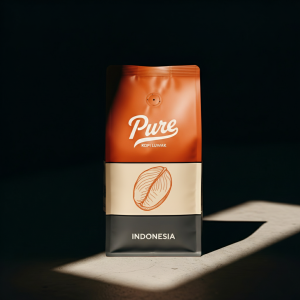
Pure Kopi Luwak
Wild civet coffee from Java. 88.5 SCA cupping score. From $125 for 100g.
Wild Asian palm civets (Paradoxurus hermaphroditus) select peak-ripe coffee cherries in the Javanese highlands during harvest season, using a sensory precision that humans harvesting at scale can’t match. A wild civet might consume 50 to 100 cherries in a single night’s foraging, each one evaluated individually. The beans pass through the digestive tract over 12-24 hours, during which proteolytic enzymes break down specific proteins in the outer bean layers — proteins that are precursors to roasting bitterness. Research published in food chemistry journals has documented measurably lower concentrations of malic and citric acids in kopi luwak compared to conventionally processed beans from the same origin, producing a smoother cup with a fundamentally different acid profile.
To a chef who thinks seriously about ingredients, this is the same conversation as the one about why dry-aged beef tastes fundamentally different from fresh. It’s enzymatic transformation. It’s biology doing something to flavor that technique alone can’t. The ingredient itself is genuinely different, not just marketably different.
Try the coffee this article is about
Wild-sourced from Java, 88.5 SCA cupping score, free US shipping. From $125 for 100g.
Shop Pure Kopi Luwak →The Culinary Case for Wild Over Farmed
Wild kopi luwak’s quality argument is inseparable from its animal welfare argument. Farmed kopi luwak — produced by civets kept in cages and fed controlled diets — has been widely criticized by animal welfare organizations and documented in investigative reporting. But the quality argument is equally compelling: a stressed civet eating an undifferentiated diet produces enzymatic activity that’s different in character from a healthy wild animal eating self-selected peak-ripe cherries. The starting material is wrong, and the digestive chemistry is compromised. The result is flat, often bitter coffee wearing an expensive label.
This is the culinary parallel that chefs understand immediately: the conditions in which an animal lives shape the quality of what it produces. The Slow Food movement, the heritage breed revival, the obsession with pastured versus factory-farmed eggs — all of this rests on the same principle. Wild kopi luwak, from verified wild-sourced suppliers in Java, is the heritage version of the product. Farmed kopi luwak is the industrial version. The gap between them is real and measurable in the cup.
As a Gift for a Chef or Culinary Obsessive
The challenge of gifting to serious food people is that they’ve usually already found everything good within their budget. A professional chef has tasted most of the premium ingredients in their category. A committed home cook with a Thermomix and a subscription to a specialty grain CSA has explored their niche. The gift that cuts through is the one in a category they haven’t prioritized — and for most culinary professionals, the coffee category is surprisingly underdeveloped. They’ll have a favorite roaster, strong opinions about espresso, probably a very good grinder. They almost certainly haven’t tasted wild kopi luwak specifically from a verified source.
That gap is exactly where the gift lands. A 100-gram bag of wild Javanese kopi luwak is a culinary experience with a genuinely interesting scientific story attached — lower bitterness through enzymatic protein hydrolysis, reduced acidity documented in food chemistry research, a selection mechanism that outperforms any human harvesting operation. For someone who thinks about ingredients the way good cooks do, that story is not marketing. It’s a specification.
The presentation is also worth considering. Kopi luwak’s story tells well verbally — the same way a great bottle of wine tells better when the sommelier explains the vintage conditions. Include a note with the gift that conveys the key points: wild civet, peak-ripe cherry selection, Javanese highland origin, enzymatic transformation during digestion. A chef will want to know this in the same way they’d want to know a cheese’s aging conditions or a fish’s catch method.
How to Brew It to Do It Justice
For a culinary audience, the brewing method matters. Wild kopi luwak is best served in a format that showcases clarity and complexity: pour-over or Chemex at medium grind reveals the full aromatic profile; French press at coarse grind emphasizes body and texture. Espresso works well and concentrates the chocolate notes, but can overpower the delicate enzymatic character if the shot runs too short.
Temperature matters more than most coffee drinkers appreciate. Brewing at 93-96°C extracts the full range of flavor compounds without scorching the more delicate aromatic molecules. As the cup cools, the flavor profile evolves — the chocolate and earthiness deepen, the smooth finish becomes more apparent. This is a coffee worth drinking slowly, which makes it the right gift for someone who thinks carefully about everything they eat and drink. The buyer’s guide to the best kopi luwak includes additional context on sourcing verification for buyers who want to confirm provenance before purchase.
One final note for the culinary gift-giver: this is a coffee that rewards comparison. A side-by-side tasting of wild kopi luwak against a quality Javanese arabica from the same general region — same origin, different processing — is as instructive as any comparative ingredient tasting. The difference isn’t subtle. The comparison against other premium coffees gives additional context if the recipient is already familiar with the premium end of the market.
Pure Kopi Luwak
Wild civet coffee from Java. 88.5 SCA cupping score. From $125 for 100g.

Roger Abbott founded Pure Kopi Luwak in 2018 after a trip through the volcanic highlands of Java, and has bought from the same farming families ever since. He only works with collectors of wild civet coffee, never caged. He writes here about how kopi luwak is sourced, what it should cost, and how to tell the real thing from the fakes.