Thomas Gilovich, a professor of psychology at Cornell University, has spent decades studying why some gifts are remembered for years and others vanish from memory within weeks. His research — published across multiple studies, including work that appeared in the Journal of Consumer Psychology — returns consistently to one variable: narrative. People remember the story attached to a gift more reliably than they remember the object’s price, its brand, or even its category. The gift that came with something to tell outlasts the gift that was merely expensive.
This finding has significant implications for how to think about gifting kopi luwak. It isn’t primarily a coffee purchase. It’s a narrative delivery mechanism in which the coffee is the physical proof that the story is real.
The Problem With Most Premium Gifts
Premium gifting has a recurring failure mode: the expensive item without a reason. The luxury hamper that signals money spent but communicates nothing about the recipient. The high-end gadget that is impressive for about a week and then becomes part of the household furniture. The spa voucher that is redeemed six months later in circumstances so removed from the gifting occasion that the connection has dissolved. These gifts are not failures of quality — they often contain genuinely good things. They’re failures of story. The recipient experiences the object but has nothing to carry forward into other conversations.
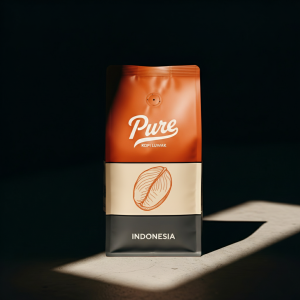
Pure Kopi Luwak
Wild civet coffee from Java. 88.5 SCA cupping score. From $125 for 100g.
Gift psychology researchers distinguish between “material” gifts, which are objects, and “experiential” gifts, which create memories. Wild kopi luwak sits unusually at the intersection of both categories. It is a physical object — a 100g bag of roasted whole-bean coffee — but the experience of drinking it, and particularly the experience of learning what it is and how it was made, is what the gift recipient actually remembers. This is genuinely rare in the premium gift space.
Try the coffee this article is about
Wild-sourced from Java, 88.5 SCA cupping score, free US shipping. From $125 for 100g.
Shop Pure Kopi Luwak →Why Wild Kopi Luwak Has an Unusually Strong Narrative
Most products, including expensive ones, have relatively thin stories. A luxury watch was designed well and manufactured with precision. A fine wine had good weather and careful winemaking. These are legitimate facts, but they’re not compelling enough to retell at a dinner table. The coffee that was selected by a wild animal, transformed by biology, collected by hand from a forest floor in Java, and exists in quantities of perhaps 500 kilograms across the entire world — that story retells itself. It has specific characters (the wild civet, the highland farmers), a setting (East Java’s coffee highlands at elevation), a process (enzymatic transformation, 12 to 24 hours, irreplaceable), and a punchline (it’s also one of the smoothest coffees in the world).
The narrative is not manufactured for marketing purposes. It is the actual production reality, which is why it survives scrutiny. When a gift recipient describes kopi luwak to someone who hasn’t heard of it, they’re not reciting ad copy. They’re telling a story that happens to be true, and that truth makes it more interesting rather than less. Stories with verifiable, specific details are retained and retold at much higher rates than generic luxury positioning. “It’s very high-quality coffee” disappears. “It’s made by wild civets in Java and they only produce 500 kilograms of the authentic version per year worldwide” stays.
The Rarity Component
Rarity works differently in gifting than in collecting. In collecting, rarity drives price and status. In gifting, rarity communicates effort — the sense that the giver found something, not just bought something. Authentic wild kopi luwak is genuinely rare in the specific sense that matters for gift psychology: it is not available at any grocery store, at most specialty retailers, or in most coffee subscription services. The recipient cannot easily obtain it themselves, which means the giver’s choice signals something specific about the relationship: I found something unusual and thought of you.
This is distinct from artificial scarcity, which experienced gift recipients recognize and discount. Wild kopi luwak’s rarity is structural — it cannot be produced in larger quantities without either compromising the wild sourcing or shifting to cage farming, which produces an inferior product that the market has largely learned to identify. The gift recipient who researches the product — and curious, experience-seeking recipients often do — will find the scarcity claim holds up to examination. That verification experience is itself part of the gift.
What This Means Practically
A 100g bag of wild Javanese kopi luwak at $125 occupies a price point that feels serious without being absurd — above the threshold of casual gifting, well below the territory that makes recipients uncomfortable about value. The gift communicates care and unusual taste without triggering the social anxiety that very expensive gifts sometimes create.
More importantly, it gives the recipient approximately ten to twelve cups of genuinely exceptional coffee, each of which carries the story forward. Every morning that they brew a cup from the bag is another small occasion in which the narrative is re-experienced. The gift has legs that a single-use experience gift or a consumed luxury item cannot replicate.
If you’re choosing between several gifts in the $100-200 range and one of them has a story this specific — a wild animal, a verifiable production process, a documented global rarity — that’s the one that gets remembered. The same principle applies regardless of occasion: the gift that teaches the recipient something they didn’t know, through an object they’ll use over two weeks rather than all at once, stays in memory far longer than its price alone would predict.
Pure Kopi Luwak
Wild civet coffee from Java. 88.5 SCA cupping score. From $125 for 100g.
Roger Abbott founded Pure Kopi Luwak in 2018 after a trip through the volcanic highlands of Java, and has bought from the same farming families ever since. He only works with collectors of wild civet coffee, never caged. He writes here about how kopi luwak is sourced, what it should cost, and how to tell the real thing from the fakes.