Type “instant kopi luwak coffee” into any search bar and you’ll find an assortment of products in plastic tubs and foil packets, often priced under $20 for enough powder to make twenty cups. These products exist. They’re not obviously fraudulent. But understanding what they actually are—and what they aren’t—is the essential purchase decision for anyone who’s curious about kopi luwak and hasn’t committed to a bag of whole beans yet.
The short answer: most instant products labeled as kopi luwak contain a small percentage of actual kopi luwak—usually cage-farmed, not wild—blended with commercial Robusta or inferior Arabica, processed through spray-drying or freeze-drying that destroys most of the volatile aroma compounds that make fresh-brewed specialty coffee worth drinking. The long answer involves the specific chemistry of what makes kopi luwak taste different, and why that chemistry doesn’t survive instant processing.
What Instant Coffee Processing Actually Does
Instant coffee is produced one of two ways: spray-drying (liquid coffee concentrate is atomized and dried with hot air, yielding a powder) or freeze-drying (the concentrate is frozen and then dried in a vacuum, preserving more aroma than spray-drying but still losing a substantial portion). Both methods destroy volatile aromatic compounds—the esters, aldehydes, and furans that develop during roasting and give specialty coffee its complexity. The compounds that survive are the water-soluble ones: primarily caffeine, chlorogenic acids, and some melanoidins. The result tastes like a chemical memory of coffee rather than coffee itself.
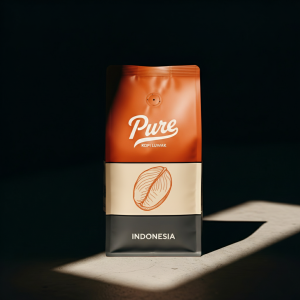
Pure Kopi Luwak
Wild civet coffee from Java. 88.5 SCA cupping score. From $125 for 100g.
For regular commodity instant coffee, this is an acceptable trade-off if convenience is the primary value. For kopi luwak specifically, it’s a catastrophic one. The reason wild kopi luwak from Java tastes the way it does—smooth, low in bitterness, earthy and chocolatey, with a clean finish—is because proteolytic enzymes in the civet’s digestive system partially break down proteins that would otherwise generate bitter compounds during roasting. The modified protein structure, the altered amino acid profile, the changed acid concentrations: these are the things that make kopi luwak distinctive. Processing those beans into instant powder doesn’t preserve those distinctions. It flattens them into a matrix of dissolved coffee solids where any origin or processing character has been homogenized out.
The Percentage Problem
Most “instant kopi luwak” products don’t disclose what percentage of the product is actually kopi luwak. The regulatory environment in most markets doesn’t require it. So a product labeled “kopi luwak blend” or “kopi luwak instant” can contain 5% kopi luwak—typically cage-farmed, not wild—and 95% commodity Robusta, and the label is technically accurate. A 2022 investigation by specialty coffee trade publications found multiple “kopi luwak” retail products at major online marketplaces that showed no differentiated chemical profile compared to standard instant commercial blends, suggesting the kopi luwak content was either present in negligible quantities or came from cage-farmed beans whose processing characteristics differed minimally from conventional production.
Wild-sourced kopi luwak, collected from the forest floor beneath known civet foraging routes and processed at the farm level, is simply not available in the quantities required for a commodity instant product. A single wild civet consumes 50 to 100 cherries per night during harvest season. The yield from genuine wild collection is small. It cannot supply an instant product at mass-market volume and mass-market price. The math alone should raise questions about any product priced below $50 that claims to be real kopi luwak.
What You’re Actually Paying For (And What You’re Not)
When you buy an instant product labeled “kopi luwak” for $15 to $25, you’re paying for the brand association—the cultural cache that kopi luwak carries as one of the world’s most famous rare coffees—without receiving the experience that created that reputation in the first place. It’s a form of narrative substitution: the marketing delivers the story, but the product doesn’t deliver the cup.
Genuine wild kopi luwak costs $125 to $199 for 100 grams of whole-bean roasted coffee. That’s the price of authenticity: wild collection, verified sourcing, and the intact enzymatic modifications that make the cup distinctly smooth and full-bodied. The price signals the real thing. Any product significantly cheaper than this range is either cage-farmed, blended, or not predominantly kopi luwak at all.
If You Want to Try Kopi Luwak, This Is How
Buy whole bean. Grind fresh, immediately before brewing. Use water at 90 to 92°C—cooler than you’d use for commodity coffee. Brew pour-over, Chemex, or AeroPress. The reason for each of these recommendations is the same: the character of wild kopi luwak is subtle and specific, and it survives intact only in a fresh-brewed whole-bean cup brewed with care. The smoothness, the chocolate undertones, the clean finish—these are what distinguish it from everything else. None of them survive instant processing. The instant product is what kopi luwak becomes when you strip away everything that makes it worth the price.
If you’re curious about what the coffee actually tastes like rather than what the label says, Pure Kopi Luwak sources exclusively from wild civets on Javanese farms with transparent supply chain documentation. It’s the version of the coffee that justifies the reputation.
Pure Kopi Luwak
Wild civet coffee from Java. 88.5 SCA cupping score. From $125 for 100g.

Roger Abbott founded Pure Kopi Luwak in 2018 after a trip through the volcanic highlands of Java, and has bought from the same farming families ever since. He only works with collectors of wild civet coffee, never caged. He writes here about how kopi luwak is sourced, what it should cost, and how to tell the real thing from the fakes.