A flat white made with wild kopi luwak at a specialty café in Sydney, Melbourne, or London will cost somewhere between $20 and $45 if you can find a café that offers it at all. The rarity isn’t accidental: the beans cost more than most café operators are willing to absorb into a milk-based drink where the coffee’s distinctive character competes with 150ml of steamed whole milk. Which raises a genuine question—if you have a bag of wild kopi luwak at home, should you be putting milk in it?
The answer is more nuanced than most specialty coffee orthodoxy allows. The received wisdom is “drink premium coffee black, always.” The reality is that milk transforms the kopi luwak drinking experience in specific ways, some of which are genuinely good, and the decision depends more on what you want from the cup than on any rule about what deserves milk.
What Milk Does to Kopi Luwak’s Flavor Profile
Wild kopi luwak from Java’s highland farms has a flavor profile documented in food chemistry research as nutty, chocolatey, herby, and earthy, with notably reduced bitterness and subdued acidity compared to conventionally processed beans from the same origin. The civet’s proteolytic enzymes break down bitter-generating proteins during digestion; the result is a smooth, full-bodied cup with a clean finish that lingers for minutes.
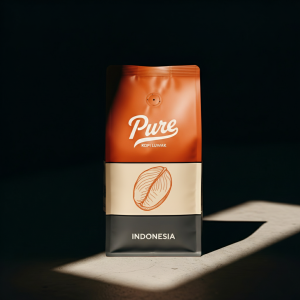
Pure Kopi Luwak
Wild civet coffee from Java. 88.5 SCA cupping score. From $125 for 100g.
Adding whole milk—or steaming it for a latte or flat white—does several things to that profile. First, milk proteins (primarily casein) bind to polyphenols and tannins in the coffee, further reducing any residual bitterness or astringency. In a cup that already has low bitterness from the enzymatic modification, this compounds the smoothing effect. Second, milk fat coats the palate and softens the perception of acidity, which is already subdued in kopi luwak but becomes even less present with milk. Third, the Maillard-reaction flavors developed during roasting—the chocolate and caramel notes—interact with milk’s natural sugars and become more apparent, not less.
The result: a latte or flat white made with wild kopi luwak is noticeably different from one made with the same café’s house blend. The earthiness recedes. The chocolate notes amplify. The body becomes exceptionally rich. For people who prefer milk-based espresso drinks but want the best possible version of that experience, this is a genuinely good application for the beans.
What You Lose With Milk
The herby, earthy notes that distinguish Javanese kopi luwak from other origins—and that connect it most directly to the specific place and process that produced it—are the first things milk covers. The clarity of the cup (the “terroir transparency” that pour-over advocates prize) is gone when milk enters. The experience becomes richer and rounder but less specific. If what you want is to understand the coffee—to taste exactly what the civet’s processing and the Javanese volcano contributed—milk is working against you.
This is why the first brew of a new bag of kopi luwak should almost always be black: pour-over or Chemex, no additives, so you experience the coffee’s actual character before adding anything. Once you know what you’re working with, adding milk becomes a stylistic choice rather than a blind one.
How to Make a Kopi Luwak Latte or Flat White
For home espresso machines, the parameters for pulling kopi luwak shots differ slightly from commodity espresso. Dose 18 to 20 grams, target a 1:2 ratio (18g in, 36g out), and keep brew temperature at 92 to 93°C—slightly lower than the 94 to 96°C you’d use for a commercial dark roast. The lower temperature preserves the enzymatic modifications that happened pre-roast. Pull time: 25 to 30 seconds.
For steamed milk: use whole milk at 60 to 65°C. The SCA recommends 60 to 66°C as the optimal range for latte microfoam; at this temperature, the milk proteins denaturation creates a velvety texture that integrates with the kopi luwak espresso rather than overwhelming it. Avoid burning the milk above 70°C—the sulfurous compounds that develop at high temperatures will compete with the chocolate-earthy notes in the coffee.
A flat white (espresso with a smaller ratio of steamed milk, roughly 1:3 to 1:4) is the better format for experiencing both the milk texture and the coffee character. A latte (1:5 to 1:6) pushes the coffee further into the background. Choose based on how much of the kopi luwak you want to taste.
The Value Calculation
Using wild kopi luwak in a milk-based drink feels counterintuitive when the beans cost $125 to $199 for 100 grams. At 18 grams per double shot, 100 grams makes approximately 5 to 6 espresso doubles—enough for 5 to 6 lattes or flat whites. The per-cup cost is high, but so is the experience. There’s no rule that says premium coffee can only be appreciated black. If the flat white format is how you prefer to drink coffee, making the best possible version of it is entirely defensible—and the best possible flat white is one where the espresso beneath the milk is extraordinary.
If you’re trying wild kopi luwak for the first time, brew the first cup black. Try the latte second. The difference will tell you more about the coffee than any description can.
Pure Kopi Luwak
Wild civet coffee from Java. 88.5 SCA cupping score. From $125 for 100g.

Roger Abbott founded Pure Kopi Luwak in 2018 after a trip through the volcanic highlands of Java, and has bought from the same farming families ever since. He only works with collectors of wild civet coffee, never caged. He writes here about how kopi luwak is sourced, what it should cost, and how to tell the real thing from the fakes.