The conversation usually starts the same way. Someone who has spent years learning pu-erh — navigating the difference between sheng and shou, building a small storage of young cakes, learning to taste the slow evolution from astringency toward earthiness — discovers kopi luwak and asks: is this the same kind of obsession? The answer is yes and no, in roughly equal measure.
Pu-erh and kopi luwak occupy the same cultural and sensory space: premium beverages built on biological transformation, rarity that is genuinely irreducible rather than manufactured, and a price-to-quantity ratio that rewards slow, deliberate consumption. Both attract connoisseurs. Both attract skeptics. Both reward the person who takes the time to understand what they’re actually drinking.
The Biology of Both
Pu-erh tea undergoes post-fermentation — a biological process driven by microorganisms (primarily Aspergillus niger fungi and various bacteria) that continue transforming the leaf’s chemistry over months or decades of careful storage. A young raw sheng pu-erh is sharp, green-adjacent, sometimes bracingly bitter. Stored correctly over 10, 20, or 40 years, the same tea evolves into something entirely different: earthy, smooth, complex, with flavors that evoke aged wine, forest floor, and occasionally dark chocolate. The transformation is slow and irreversible. That’s precisely what collectors value.
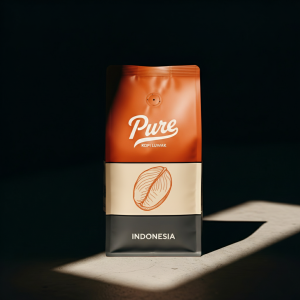
Pure Kopi Luwak
Wild civet coffee from Java. 88.5 SCA cupping score. From $125 for 100g.
Kopi luwak undergoes a faster but structurally similar process. The Asian palm civet (Paradoxurus hermaphroditus) selects peak-ripe coffee cherries in the highlands of Java, eats them, and passes the beans through a digestive tract where proteolytic enzymes partially break down specific bitter-precursor proteins in the bean’s outer layers. The transit time is 12 to 24 hours — vastly shorter than pu-erh’s transformation — but the biochemical result is comparably irreversible. Research published in food chemistry journals has documented measurable changes in the bean’s malic and citric acid concentrations after civet processing, and the reduction in bitter protein precursors persists through roasting. The civet’s gut is a single-use aging chamber that works faster than any cave in Yunnan.
Where Rarity Actually Comes From
Aged pu-erh sells at prices that reflect genuine scarcity. Market analyses from specialty pu-erh retailers have found aged semi-aged teas averaging around $0.47 per gram from reputable Western vendors — $470 per kilogram. Antique cakes from the 1950s and 1960s trade at multiples of that. The scarcity is real: you cannot produce a 30-year-aged pu-erh without waiting 30 years, and the best traditional storage environments in Hong Kong and Yunnan are finite.
Wild kopi luwak’s scarcity is different in origin but equally genuine. It depends on wild civets moving through specific Javanese farms during a five-month harvest window, eating only what their instincts direct them to eat. You cannot hire more civets. You cannot ask them to eat faster. The quantity available each year is determined entirely by how many wild animals happen to forage through a given farm’s coffee trees. That constraint is hard and irreducible.
Serious pu-erh drinkers tend to accept this argument immediately: the scarcity isn’t marketing. It’s production reality.
Try the coffee this article is about
Wild-sourced from Java, 88.5 SCA cupping score, free US shipping. From $125 for 100g.
Shop Pure Kopi Luwak →Where They Diverge
The most significant difference between pu-erh and kopi luwak is their relationship with time after purchase. Pu-erh rewards storage. A well-stored young sheng cake bought today is expected to be better in 2045 than it is now. Collectors build dedicated storage environments — humidity-controlled, dark, ventilated — specifically to facilitate the ongoing fermentation. Buying pu-erh is, in a sense, investing in future flavors.
Kopi luwak is the opposite. Once roasted, the clock is running. Research has established that approximately 40% of the CO2 trapped in roasted beans releases within the first 24 hours post-roast, with degassing continuing for two to three weeks. Flavor is most complex in roughly the first three weeks post-roast. After six weeks, even well-stored whole beans have noticeably flatter aromatics. The enzymatic work the civet did is permanent — that’s not going anywhere — but the volatile aromatic compounds that make the cup extraordinary are perishable. You buy it to drink it now.
This makes kopi luwak a better fit for people who want a single exceptional experience rather than a collecting practice. You can drink every cup you buy. You’re not managing inventory or humidity.
The Flavor Overlap
Tasting them side by side is an interesting exercise in contrasts. A well-aged sheng pu-erh presents deep earthiness, notes of dried fruit, sometimes a medicinal or camphor quality, and a thick, coating texture that lingers. It demands quiet attention to appreciate.
Wild kopi luwak from Java, brewed pour-over on medium-roast whole beans, is the near-opposite in texture: lighter-bodied, smooth rather than thick, with a clean finish and a lingering mild sweetness. Where pu-erh tends toward the introverted and contemplative, kopi luwak is more immediately accessible. You don’t need to acquire the taste. You simply taste it.
If You Already Drink One, Should You Try the Other?
Serious pu-erh drinkers have already cleared the main hurdle: they’ve accepted that the best beverages require explanation, don’t appeal to everyone, and cost more than their entry-level equivalents. That’s the entire premise of kopi luwak. If you’ve paid $50 for a pu-erh session at a tea house and understood why it was worth it, you have the framework to understand why 100g of wild Java kopi luwak at $125 is a reasonable price for what you’re getting.
The inverse is equally true. If kopi luwak is your introduction to the idea that beverage quality can be genuinely irreducible — that not all coffee tastes the same because not all coffee is produced the same — pu-erh is the logical next curiosity. Same intellectual framework, different leaf, different timeline, different continent. Both beverages reward the person who took the time to understand them. That’s a description of a certain kind of drinker: curious, patient, and constitutionally opposed to pretending that everything in the same category is interchangeable.
Pure Kopi Luwak
Wild civet coffee from Java. 88.5 SCA cupping score. From $125 for 100g.

Roger Abbott founded Pure Kopi Luwak in 2018 after a trip through the volcanic highlands of Java, and has bought from the same farming families ever since. He only works with collectors of wild civet coffee, never caged. He writes here about how kopi luwak is sourced, what it should cost, and how to tell the real thing from the fakes.