Sulawesi Toraja entered the specialty coffee mainstream in the 1990s when Starbucks featured it in its rotating single-origin program — a choice driven by the coffee’s genuinely distinctive character rather than geographic novelty. Grown at 1,200 to 1,800 meters in the mountainous Tana Toraja regency of central Sulawesi, surrounding the town of Makale, these coffees carry the fingerprint of wet-hulling processing — the uniquely Indonesian Giling Basah method — and deliver earthy, chocolate, brown sugar, and molasses flavors at unusually low acidity with a full, syrupy body. They’re among the most interesting origin coffees Indonesia produces.
Kopi luwak, sourced primarily from Java and Sumatra, operates in a different register entirely. The question of how these two coffees compare isn’t just about flavor — it’s about what the buyer is actually looking for from a premium Indonesian coffee.
What Sulawesi Toraja Is
The Toraja region of central Sulawesi sits outside the volcanic belt that runs through Java and Sumatra, which is one reason its coffees taste different from the Javanese highland Arabicas most commonly associated with premium Indonesian coffee. The soils are limestone-influenced rather than volcanic, and the terraced smallholder farms that run across steep hillsides at 1,200 to 1,800 meters (3,940 to 5,900 feet) produce Arabica beans with a distinctive weight and earthiness that reflects their non-volcanic origin.

Pure Kopi Luwak
Wild civet coffee from Java. 88.5 SCA cupping score. From $125 for 100g.
The processing method matters as much as the terroir. Giling Basah — wet-hulling — is practiced across most of Indonesian specialty coffee production, including Toraja. Beans are hulled while still at 30 to 50 percent moisture content, versus the 10 to 12 percent at which washed coffees are hulled. The result is a bean that develops differently during roasting: lower acidity, heavier body, a characteristic earthy or musty depth that is either a flaw or a feature depending on your palate. For many specialty coffee drinkers, that earthiness is exactly what they want from an Indonesian cup.
Quality Toraja at retail runs $20 to $35 per 100 grams from specialty roasters — significantly less than wild kopi luwak, and representing genuine value for what it delivers in flavor complexity and regional character.
What Wild Kopi Luwak Is
Wild kopi luwak is not an origin coffee in the conventional sense — it’s a processing method applied to coffee cherries that wild Asian palm civets have selected and consumed. The civets range across plantation farms in Java’s highland regions (and, to a lesser extent, Sumatra and other islands), eating peak-ripe coffee cherries and passing the beans intact through their digestive tracts. The beans are then collected from the forest floor, individually washed and sun-dried, and medium-roasted.
The enzymatic transformation during gut passage creates the sensory difference. Proteolytic enzymes partially break down proteins in the outer bean layers — proteins that are precursors to bitter compounds during roasting. Research comparing the acid profiles of kopi luwak and conventionally processed beans from the same Javanese farms has documented lower concentrations of malic acid and citric acid in authentic kopi luwak, explaining the characteristic smoothness and reduction in sharp acidity.
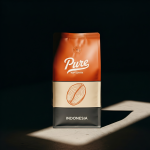
The price — $125 per 100 grams for Pure Kopi Luwak‘s Java-sourced wild beans — reflects genuine scarcity. A single productive wild civet deposits 50 to 100 coffee beans on a productive night. Collecting, washing, sorting, and processing those beans by hand produces very small yields per farm, per season. There is no shortcut to more volume without moving to caged civets, which changes the product fundamentally.
Try the coffee this article is about
Wild-sourced from Java, 88.5 SCA cupping score, free US shipping. From $125 for 100g.
Shop Pure Kopi Luwak →The Flavor Comparison
These two coffees share Indonesian origins and a commitment to earthy, full-bodied character, but they arrive at those qualities through entirely different paths.
Sulawesi Toraja’s earthiness comes from Giling Basah processing — the specific moisture conditions during hulling that create its characteristic musty depth. The flavor is bold, chocolate-forward, with lower fruit notes than washed East African coffees, and a body that sits heavily and satisfyingly on the palate. It responds well to medium-dark roasting and functions beautifully as espresso, where the body weight holds up against milk without losing character.
Wild kopi luwak’s smoothness comes from enzymatic processing — the civet’s digestive chemistry modifying the bean’s protein and acid profile before roasting begins. The earthiness is present but cleaner, without the particular fermented depth that Giling Basah introduces. The chocolate and caramel notes are prominent. The absence of bitterness is the defining feature: a cup of well-sourced wild kopi luwak lacks the sharpness at the back of the palate that virtually all other premium coffees carry, including Sulawesi Toraja.
A useful shorthand: Toraja is bold and earthy with a musty complexity. Kopi luwak is smooth and clean with a chocolate depth and the absence of everything you expected bitterness to contribute. They’re not substitutes — they’re different solutions to different preferences.
The Ethical Dimension
Both coffees exist within Indonesia’s complex agricultural landscape, but the ethical considerations are different. Sulawesi Toraja presents no particular welfare concerns — it’s smallholder farming at altitude, with the ethical variables common to any agricultural product. The picture varies by producer, but the category itself is not structurally problematic.
Wild kopi luwak requires more careful sourcing, because the distinction between wild-collected and cage-farmed product is significant for both ethics and flavor. Cage-farmed kopi luwak is produced from civets under stress, fed indiscriminately, and the resulting coffee lacks the quality of wild-sourced beans. Buying wild-only from a producer with transparent sourcing addresses both concerns simultaneously. The wild vs caged distinction is the most important variable in this category — more important than price, more important than roast level.
Which One to Buy
The answer depends on what you’re buying it for.
If you want an exceptional Indonesian origin coffee that rewards attention and performs well across multiple brew methods, Sulawesi Toraja from a quality specialty roaster represents outstanding value at $20 to $35 per 100 grams. It belongs in any serious coffee rotation and holds its own against the best single-origin coffees from other producing countries.
If you want the coffee that represents the furthest edge of what Indonesian — or global — coffee can produce, the one that delivers a sensory experience nothing else replicates and functions as either a personal treat or an extraordinary gift, wild kopi luwak is the answer. The price difference between these two coffees is substantial, but it reflects a real difference in the rarity and character of what you’re purchasing.
Toraja is the specialist’s Indonesian coffee — excellent, underappreciated outside serious coffee circles, worth seeking out. Kopi luwak is the exception that the category produces, and that buyers tend to remember the first time they taste it.
Pure Kopi Luwak
Wild civet coffee from Java. 88.5 SCA cupping score. From $125 for 100g.

Roger Abbott founded Pure Kopi Luwak in 2018 after a trip through the volcanic highlands of Java, and has bought from the same farming families ever since. He only works with collectors of wild civet coffee, never caged. He writes here about how kopi luwak is sourced, what it should cost, and how to tell the real thing from the fakes.