In 1986, a rare medieval manuscript arrived at the Bibliothèque nationale de France after decades in private hands. The cataloguing librarian who received it spent three days doing nothing but smelling it — the binding, the pages, the faint residue of whatever oils the monks had used eight centuries earlier. She described the experience, later, as the most complete sensory encounter of her career. Librarians do not merely process information. They live in close proximity to the irreplaceable.
This matters when you are choosing a gift for one.
The standard approach — a gift card to a bookshop, a novelty item shaped like a card catalogue, a tote bag with a Dewey decimal joke — fundamentally misreads the person. A librarian’s relationship with rare and carefully preserved things is professional and intimate at the same time. They understand provenance. They understand why some things cannot be replicated. They understand, better than most, that the original is always different from the copy.
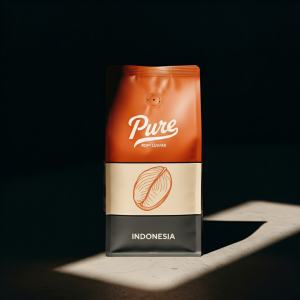
Pure Kopi Luwak
Wild civet coffee from Java. 88.5 SCA cupping score. From $125 for 100g.
Wild kopi luwak from Java is, in that sense, exactly the kind of thing a librarian will understand without being told. It is not a branded commodity. It cannot be industrially produced. The Asian palm civets that select and partially digest the coffee cherries in the highland forests of Java do so on their own schedule, in terrain that no farm can fully replicate. The result — after careful collection, washing, drying, and roasting — is a coffee that exists because a wild animal made a specific choice in a specific forest. There is only so much of it. Once a harvest is over, it is gone.
Archivists in particular will recognize what that means. Their entire professional life is organized around the principle that some things cannot be re-created, only preserved. A sixteenth-century letter exists in one place. A photograph negative from 1920 exists in one drawer. Wild kopi luwak from a specific Indonesian harvest exists in a finite number of bags. The scarcity is not a marketing decision. It is simply what happens when you refuse to industrialize something worth protecting.
The flavor rewards the kind of attention that librarians and archivists bring to their work. The tasting notes for wild Java kopi luwak — low acidity, chocolate and earth undertones, a finish that lingers without bitterness — describe a coffee that reveals itself slowly. It is not a loud cup. It does not announce itself the way a heavily fruited natural process Ethiopian might. It is a coffee you have to pay attention to, which is something a librarian will understand entirely.
There is also the question of the morning ritual. Library work requires sustained concentration of a particular kind — not the crisis-driven focus of emergency medicine or finance, but the long, patient attention required to locate a source, cross-reference a catalogue entry, or decide which of seventeen translations best preserves an author’s original intent. Coffee has always been the companion of that kind of work. Samuel Johnson, who practically lived in coffeehouses, was known to drink extraordinary quantities of tea and coffee while working on his 1755 Dictionary. The British Museum Reading Room, where Marx wrote Das Kapital and many others spent entire careers, was famous for its provision of refreshments to working scholars. The connection between deep intellectual work and the deliberate cup is not incidental.
What changes when the cup is exceptional is the quality of the pause. Most coffee is consumed functionally — you drink it, the caffeine arrives, you get back to work. A genuinely rare coffee introduces a different relationship. It requires a few seconds of actual attention before the first sip and after it. That pause — the noticing — is not a luxury. It is the point. And for someone whose working life is built around noticing things others overlook, it resonates in a way that a generic gift simply cannot.
If you are buying for a librarian or archivist who is retiring, the gift acquires an additional register. Retirement from this kind of work is not a relief from something unpleasant — it is a departure from something deeply meaningful. The collections, the colleagues, the daily proximity to material that matters: all of that ends on a specific date. A gift that acknowledges the weight of that departure, and offers something extraordinary for the mornings that follow, lands differently than another framed certificate.
For the librarian who is not retiring, the same logic applies in a more straightforward register: here is something rare, here is something that rewards your attention, here is something that was made with the same care you bring to your own work. Pure Kopi Luwak is wild-sourced from Java, available in 100g and 250g, and ships internationally. A 100g bag makes approximately twelve cups — enough for a fortnight of exceptional mornings.
The best gifts are the ones that say something true about the recipient. For the person who has spent a career in close proximity to rare things, the gift that says it best is something rare itself — not a novelty, not a reference to their job title, but something that belongs in the same register as the things they have spent their life protecting.
Pure Kopi Luwak
Wild civet coffee from Java. 88.5 SCA cupping score. From $125 for 100g.

Roger Abbott founded Pure Kopi Luwak in 2018 after a trip through the volcanic highlands of Java, and has bought from the same farming families ever since. He only works with collectors of wild civet coffee, never caged. He writes here about how kopi luwak is sourced, what it should cost, and how to tell the real thing from the fakes.