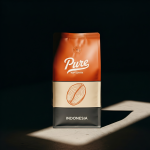
When you have to ship a birthday present to someone on the other side of the world, you stand in front of the kitchen counter and try to calculate what fits, what survives customs, and what actually says something. A card is easy but insufficient. A gift card is impersonal. Flowers don’t cross borders. Wine does, technically, but the regulations are a headache and a 750ml bottle of something decent costs about the same as a 100g bag of wild kopi luwak â which, unlike wine, keeps for months, brews into twelve separate occasions, and comes with a story that runs longer than the bottle would last.
Gift-giving across distance is a particular art. What you’re really trying to do is be present at a moment you can’t attend â the birthday dinner you couldn’t fly back for, the promotion you heard about over a voice note, the housewarming across three time zones. The physical object matters less than what it communicates: I thought about this. I thought about you. I sent something that couldn’t be bought at the airport.
What Most Long-Distance Gifts Get Wrong
The default remote gift options are all variations on the same problem: they’re either too generic (gift cards, subscription boxes, mass-produced items available anywhere) or too fragile (chocolates that arrive broken, flowers ordered from a local florist who may or may not deliver, food items that don’t travel well in heat or humidity). The internet can ship almost anything, but “almost anything” looks different when you’re trying to mark something specific.

Pure Kopi Luwak
Wild civet coffee from Java. 88.5 SCA cupping score. From $125 for 100g.
Coffee has one significant advantage as a long-distance gift: it’s consumed slowly, one cup at a time, across a week or two of mornings. A good bottle of wine is one evening. A box of chocolates is a week at best. A 100g bag of wild kopi luwak is ten to twelve cups â ten to twelve mornings when the person you’re thinking of picks up something you sent them, grinds it, and brews it deliberately. The gift keeps appearing in their morning ritual long after the birthday, the promotion, the housewarming.
Try the coffee this article is about
Wild-sourced from Java, 88.5 SCA cupping score, free US shipping. From $125 for 100g.
Shop Pure Kopi Luwak →Why Rare Coffee Travels Differently
There’s a practical case to be made for coffee as a gift â it’s shelf-stable, vacuum-packed, travels in postal systems without special handling, clears customs in most countries as a processed food product, and doesn’t require refrigeration. But the more interesting case is experiential: ordinary coffee doesn’t function as a gift in any meaningful way. A grocery-store bag of beans says “I was at the grocery store.” Wild kopi luwak from the highlands of Java says something else entirely.
What it says, specifically, is that you put thought into it. The Asian palm civet (Paradoxurus hermaphroditus), a small nocturnal animal native to South and Southeast Asia, selects only peak-ripe coffee cherries from highland farms â preferring the sweetest, most fully developed fruit over under-ripe or over-fermented cherries that a human harvester would inevitably include. The beans pass through the civet’s digestive tract, where proteolytic enzymes modify the protein structure of the outer bean layers, then are collected, washed, processed, and roasted. The result is measurably different coffee: lower in the chlorogenic acids responsible for bitterness, smoother on the palate, with a body and complexity that genuine specialty coffee drinkers notice immediately.
That’s the story that comes with the package. Not as a label they read once, but as the reason the coffee tastes the way it does. The gift has a narrative built into the cup.
The Practical Details for Shipping
A 100g bag of Pure Kopi Luwak ships to addresses in the US, UK, Europe, and most international destinations. It arrives vacuum-sealed, which extends the freshness window significantly â properly stored in a cool, dark place, whole-bean kopi luwak remains at its best for eight to ten weeks after roasting. Ground coffee has a shorter window, which is why whole-bean is the better choice for anything that may take two weeks in transit.
The 100g size ($125) is the right scale for a distance gift â meaningful without being excessive. The 250g ($199) makes sense for someone who drinks coffee every morning and will work through it methodically. Either way, you’re looking at a per-cup cost of roughly $10-$17, which puts it in the same range as a specialty cafe cortado and the kind of price that makes someone treat the cup with attention rather than habit.
Who This Gift Actually Works For
The long-distance coffee gift isn’t universal â it lands hardest with people who already have a relationship with good coffee. Someone who drinks instant doesn’t have the frame of reference to appreciate what they’re holding. But someone who owns a French press, a pour-over setup, or even a decent espresso machine and has been drinking specialty coffee for a few years will understand immediately that what you’ve sent them is not their usual morning coffee.
Which is exactly the point. You’re not just sending coffee. You’re sending an experience they can have alone, on a Tuesday morning, 5,000 miles from where you’re reading this. It’s one of the quieter ways to be present at a distance â not a grand gesture, but a specific, repeatable one that shows up in their kitchen for the next two weeks.
If you’re curious about how to choose the right kopi luwak â what to look for in terms of sourcing, roast, and authentication â the buyer’s guide covers the full picture. For a gift, the sourcing question is particularly important: wild-sourced, from free-ranging civets on Indonesian farms, is the only version that produces the flavor profile worth paying for. The difference between wild-sourced and cage-farmed is significant enough to matter when it arrives on someone else’s kitchen counter.
The box is packed. The label is filled out. The person you’re thinking of lives somewhere else, and the occasion is real. Send the coffee.
Pure Kopi Luwak
Wild civet coffee from Java. 88.5 SCA cupping score. From $125 for 100g.
Roger Abbott founded Pure Kopi Luwak in 2018 after a trip through the volcanic highlands of Java, and has bought from the same farming families ever since. He only works with collectors of wild civet coffee, never caged. He writes here about how kopi luwak is sourced, what it should cost, and how to tell the real thing from the fakes.