Between Mother’s Day on May 10 and the last university commencement ceremonies in mid-June, there’s a six-week window in spring that functions as the most gift-intensive period outside December. Americans spent $35.7 billion on Mother’s Day gifts alone in 2024, according to the National Retail Federation — a record that reflected a shift toward experiential and premium consumable gifts rather than the traditional flowers-and-cards approach. That trend has only accelerated, and it’s created a clear opportunity for anyone who wants to give something genuinely memorable rather than something forgotten by June 15.
The challenge is that the “premium consumable gift” category has gotten crowded with predictable options. Specialty food subscriptions. Artisan chocolate assortments. Expensive olive oils from obscure Greek islands. None of these are bad — but they’ve become the default, which means they no longer signal the thought and attention that made them appealing in the first place. What cuts through is genuine rarity and a specific story that the recipient can retell.
For the Mother Who Actually Loves Coffee
Not every mother-who-loves-coffee will appreciate specialty coffee at the same level — and that’s fine. But if the person you’re buying for has opinions about how their coffee is brewed, knows what a pour-over is, or has expressed frustration with grocery-store beans, wild kopi luwak from Java represents a meaningful step beyond what they’ve tried.
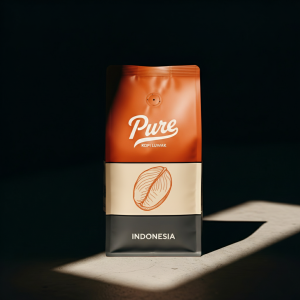
Pure Kopi Luwak
Wild civet coffee from Java. 88.5 SCA cupping score. From $125 for 100g.
The story behind kopi luwak is exactly the kind of thing that turns a gift into a conversation. Asian palm civets foraging wild in Java’s highland coffee gardens, selecting peak-ripe Arabica cherries by instinct, producing a processed coffee whose flavor profile — smooth, chocolate-forward, low acidity — results directly from their digestive enzymes. It’s a genuine origin narrative, not marketing copy. Someone who loves coffee and learns this for the first time is going to be curious in a specific way that they’ll remember.
Global annual production of authentic wild kopi luwak — the real thing, from free-ranging civets, not the caged imitation that flooded the market in the 2000s — is estimated at approximately 500-1,000 kilograms. The 100g bag of Pure Kopi Luwak at $125 represents something genuinely rare: fewer than one in a million coffee drinkers will ever open a bag of authentic wild-sourced kopi luwak on a Saturday morning. That’s not meaningless, even for people who don’t typically place weight on exclusivity.
For the Graduate Who Deserves Something Better Than a Gift Card
Graduation gifts are notoriously difficult to get right because graduates range from “I need practical things for my apartment” to “I’m starting a career that pays $180,000” depending entirely on their field and your relationship with them. Wild kopi luwak works across that range in a way that most gifts don’t.
For the new professional entering a demanding career, the implicit message of a bag of the world’s most expensive coffee is clear and appropriate: you’ve earned something uncommon. The practical element — it’s something they’ll actually use every morning — prevents it from being purely symbolic. And at $125, it’s priced at a level that communicates genuine thought without being ostentatious.
For the graduate who’s about to start a lean few years in an entry-level role, the same bag reads differently: a reminder that exceptional things exist and that they’ve earned access to them, at least for a few weeks until it runs out. That’s not a bad message to communicate to someone at the beginning of something.
For the Spring Host Who Already Has Everything for the Kitchen
Spring entertaining season — garden parties, outdoor dinners, late-afternoon gatherings — creates a different gift need: something for the person who’s hosting rather than the person being celebrated. Housewarming gifts and host gifts peak in spring, and the problem with both categories is that kitchens are already equipped and most consumable options feel inadequate.
The advantage of kopi luwak as a host gift is that it arrives with a specific purpose: serving it to guests. A 100g bag brews 6 to 10 cups — exactly enough for a small dinner party or a Sunday brunch. The host gets to be the person who served kopi luwak, which is a different level of hospitality performance than serving an excellent specialty single-origin. People remember being served something they’ve only heard about and never tasted.
Verification Before You Buy
Spring gifting season is when kopi luwak scams proliferate. The search traffic spikes, and so does the supply of cheap fake product. The most reliable indicator of authentic wild kopi luwak is pricing: below $80 for 100 grams almost certainly indicates cage-farmed or adulterated product. Wild-sourced kopi luwak requires labor-intensive collection across unstructured forest and farm environments that no efficient cage operation can replicate economically at those price points.
Source specificity matters equally. A producer who can name the island (Java), the region (the volcanic highlands of West Java), and the variety (Arabica Typica) is far more credible than one offering “Indonesian kopi luwak” without further detail. The full authentication checklist is covered in the buyer’s guide, and the price breakdown explaining what legitimate wild kopi luwak costs — and why — is covered in the pricing guide.
Pure Kopi Luwak
Wild civet coffee from Java. 88.5 SCA cupping score. From $125 for 100g.

Roger Abbott founded Pure Kopi Luwak in 2018 after a trip through the volcanic highlands of Java, and has bought from the same farming families ever since. He only works with collectors of wild civet coffee, never caged. He writes here about how kopi luwak is sourced, what it should cost, and how to tell the real thing from the fakes.