In the summer of 2023, a café in Ho Chi Minh City’s Dong Khoi district made international rounds on Reddit when a traveler posted a photo of a $35 cup labeled “premium wild weasel coffee.” The beans, sourced from what the café described as a family farm near Da Lat, had never seen the inside of any animal. They were Robusta, treated with a commercially produced fermentation additive made by a company that openly advertises “civet digestive enzyme simulation” on its product pages. The café’s menu was technically accurate on one count: the coffee was from Vietnam. Everything else was marketing.
This kind of confusion is almost impossible to avoid when shopping for animal-processed coffee, because the term “weasel coffee” has been deployed so loosely — across two countries, three languages, and about forty years of commercial kitsch — that it now means almost nothing on its own. If you are trying to decide between “weasel coffee” and kopi luwak, the first thing you need to understand is that the distinction is not always geographic. Sometimes it is the difference between authentic wild-collected coffee and a bottle of enzyme solution poured over Robusta beans.
What “Weasel Coffee” Actually Refers To
The short answer: it is a mistranslation that stuck. In Vietnamese, the Asian palm civet (Paradoxurus hermaphroditus) is called “chon” — a word that Vietnamese speakers also apply loosely to mustelid animals including actual weasels. Early Western travelers tasting civet-processed coffee in Vietnam heard the word “chon,” associated it with the weasel-like mustelids they recognized, and the English label “weasel coffee” took hold. The problem is that no weasel has ever had anything to do with coffee. The animal processing the beans in both Indonesia and Vietnam is the same species — the Asian palm civet — just labeled differently depending on where the cup was poured and who was translating.
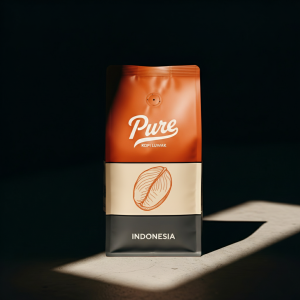
Pure Kopi Luwak
Wild civet coffee from Java. 88.5 SCA cupping score. From $125 for 100g.
In Indonesia, the coffee is called kopi luwak. “Kopi” means coffee, “luwak” is the local name for the civet. In Vietnam, the same process produces “cà phê chồn” — civet coffee in Vietnamese, marketed to English speakers as weasel coffee. Biologically identical concept. The confusion begins when the production ethics and authenticity levels diverge sharply.
The Vietnam Side: A Market Built on Artificial Simulation
Vietnam is the world’s second-largest coffee producer after Brazil, and its industry is almost entirely built on Robusta — the high-yield, high-caffeine variety used in instant coffee and espresso blends. Genuine civet-processed Vietnamese coffee exists, but it is exceptionally rare. The civets available to do the selecting are fewer, the certified wild-collection infrastructure is less developed than in Java or Sumatra, and the premium price commanded by authentic product is difficult to sustain in a market where imitation has become normalized.
The imitation is sophisticated. Trung Nguyen, one of Vietnam’s largest coffee manufacturers, markets a “Weasel Coffee Legend” range that uses biosimulation — a proprietary process that applies isolated digestive enzymes and fermentation cultures to Robusta beans, mimicking the chemical changes that occur inside a civet’s gut. The company does not hide this: it describes the product as “using bio-fermentation techniques inspired by the civet’s digestive process.” This is not fraud in the strict legal sense. But it is being sold beside genuinely wild-sourced products, at prices that suggest authenticity, in a market where buyers have no reliable way to distinguish one from the other.
The problem became acute enough that scientists at Osaka University published research on a metabolomic detection method specifically designed to identify authentic kopi luwak against biosimulated imitations. The method uses nuclear magnetic resonance spectroscopy to profile the unique compound signatures that wild civet fermentation produces — signatures that cannot be perfectly replicated by an enzyme solution applied third-partyly. The detection science works. The challenge is that no café menu or Amazon listing comes with an NMR report attached.
Try the coffee this article is about
Wild-sourced from Java, 88.5 SCA cupping score, free US shipping. From $125 for 100g.
Shop Pure Kopi Luwak →Where Kopi Luwak Stands in Comparison
Indonesian kopi luwak — specifically the wild-sourced variety from Java or Sumatra — operates in a cleaner verification environment for one structural reason: the supply chain is shorter and the origin documentation is more developed. Indonesian producers who sell internationally have spent years building traceability systems, partly because the export market demands them and partly because the consequence of being caught selling farmed-as-wild is severe in terms of reputation.
That does not mean Indonesian kopi luwak is immune to fraud. Farmed civet coffee — produced from animals kept in cages and force-fed cherries without selective foraging — is widely sold as wild-collected, often by the same e-commerce sellers who market Vietnamese weasel coffee at price points that should trigger suspicion. The distinction between wild and caged kopi luwak is as commercially important as the distinction between genuine and simulated Vietnamese product, because the caged version offers none of the quality advantages that justify the premium.
Wild kopi luwak from a verified Javanese producer retails between $100 and $150 per 100 grams. Vietnamese weasel coffee products — even the ones claiming genuine wild-civet origin — typically sell for $30 to $60 per 100 grams at retail. That price gap is telling. If the underlying cost of authentic wild-civet processing were comparable, the retail prices would converge. They don’t, because the products are not the same.
How to Navigate the Market Without Getting Deceived
The practical advice is straightforward once you understand what you’re comparing. “Weasel coffee” as a generic descriptor tells you almost nothing about what is in the bag. It could be authentic wild chon from a Vietnamese farm, a Trung Nguyen biosimulated blend, a mislabeled farmed Indonesian product, or something entirely invented. The term has no legal protection, no industry-standard definition, and no certifying body behind it.
“Kopi luwak” carries slightly more regulatory weight by virtue of Indonesia’s geographic indications system and the export documentation that accompanies legitimate shipments, but it too requires scrutiny. The questions to ask any seller — Vietnamese or Indonesian, weasel or luwak — are the same: Is it wild-collected or farmed? What is the specific island and farm origin? Is there third-party certification of the processing method? What is the roast date?
For buyers who want the genuine experience — the enzymatic smoothness, the low bitterness, the chocolatey complexity that comes from wild civet selection of peak-ripe cherries — the cleanest path is a verified wild-sourced Javanese kopi luwak from a producer with transparent supply chains. Pure Kopi Luwak sources exclusively from wild civets on Java, with full origin documentation and roasted-to-order whole beans. The “weasel coffee” framing never applies here, not because of geography, but because the production method is verifiable and the animal is never caged.
The weasel coffee market will keep producing confusion as long as the name carries mystique without regulatory meaning. Buying around it means asking the questions that menus and Amazon listings don’t answer — and knowing that the price point itself is often the most honest signal available.
Pure Kopi Luwak
Wild civet coffee from Java. 88.5 SCA cupping score. From $125 for 100g.
Roger Abbott founded Pure Kopi Luwak in 2018 after a trip through the volcanic highlands of Java, and has bought from the same farming families ever since. He only works with collectors of wild civet coffee, never caged. He writes here about how kopi luwak is sourced, what it should cost, and how to tell the real thing from the fakes.