In the early 15th century, Sufi mystics in Yemen’s highland regions were among the first people to brew coffee as a hot beverage rather than eat it as a food — chewing the roasted beans the way people before them had done for generations. The leap to hot water was decisive. Within decades, coffeehouses had spread through Mecca, Cairo, and Constantinople. The Port of Mocha on Yemen’s Red Sea coast became the world’s dominant coffee trade hub, so thoroughly synonymous with the bean that “mocha” still carries that origin six centuries later.
Wild kopi luwak carries a different kind of history. It begins in the same era of colonial expansion that brought coffee from Yemen to Java — the Dutch East India Company introduced Arabica seedlings to Java’s highlands in 1696, planting the trees that wild Asian palm civets would eventually begin selecting from on their nightly foraging routes. The two coffees share a common ancestor, separated by an ocean and a digestive tract.
The Flavor Profiles Are Genuinely Opposite
Yemeni coffee is dry-processed in one of the most ancient ways still practiced at commercial scale. The cherries are left to dry on the skin — sometimes on raised beds in the highland air, sometimes on rooftops — for weeks before hulling. The extended contact between the fermenting pulp and the bean produces a cup that is intensely fruity: dried blueberry, dark plum, wine-like fermented notes, sometimes a savory earthiness that few other origins can match. Acidity is pronounced and bright, the kind of complex lift that makes Yemeni coffee immediate and exciting.
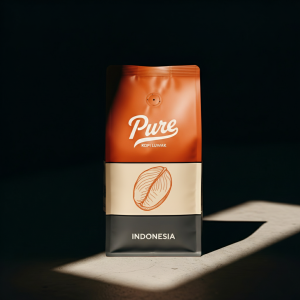
Pure Kopi Luwak
Wild civet coffee from Java. 88.5 SCA cupping score. From $125 for 100g.
Wild kopi luwak moves in the opposite direction. The civet’s digestive system modifies the bean’s chemistry in a way that reduces bitterness precursors and lowers the concentrations of malic and citric acid compared to conventionally processed coffee from the same origin — differences documented in food chemistry research. The cup that emerges is smooth, chocolatey, full-bodied, and almost entirely free of the sharpness that defines most premium African and Middle Eastern coffees. Where Yemeni mocha announces itself on the first sip, wild kopi luwak settles in. The complexity is there — caramel, dark chocolate, earthy undertones — but it builds rather than strikes.
For a buyer who has tried both, the experience is genuinely complementary rather than competitive. These are coffees for different moods. Yemeni mocha is a morning cup that opens your eyes in the literal as well as metaphorical sense. Wild kopi luwak is something to be taken seriously, unhurriedly, without distraction.
Try the coffee this article is about
Wild-sourced from Java, 88.5 SCA cupping score, free US shipping. From $125 for 100g.
Shop Pure Kopi Luwak →Price and Availability: What You’re Actually Paying For
Specialty Yemeni coffee commands significant prices for its own reasons. The ongoing conflict in Yemen has compressed the country’s agricultural infrastructure and export capacity since 2015, making genuinely farm-traceable Yemeni coffee both rarer and more expensive than it would otherwise be. Premium specialty Yemeni lots retail between $60 and $100 per 100g from reputable importers; auction prices have reached considerably higher for exceptional lots of rare heirloom varieties. The Yemenia variety — a new mother variety exclusive to Yemen, first identified by specialty importer Qima Coffee in the early 2010s — represents the cutting edge of what Yemeni coffee can achieve, and it is exceptionally hard to find.
Wild kopi luwak occupies its own tier. Properly authenticated wild-collected beans from Java retail at $125 to $199 per 100g. The price reflects genuine scarcity: wild civets forage independently, process small volumes, and cannot be scaled the way even the most labor-intensive conventional processing can. According to Wikipedia, wild-collected kopi luwak can retail at $1,300 per kilogram — a figure supported by the rarity of genuinely wild-sourced product, not just brand positioning.
Both coffees carry significant counterfeiting risk. Yemeni coffee is extensively adulterated with cheaper Ethiopian and Kenyan beans mislabeled as Yemeni. Kopi luwak is even more problematic: the majority of commercially sold “kopi luwak” is either cage-farmed (which changes the digestive chemistry and produces inferior coffee) or entirely fake. Buying from a verified, traceable source matters more for these two coffees than for almost any other premium product in the category. The full breakdown of the world’s most expensive coffees covers the authentication question in detail.
Which One to Buy
The answer depends on what you want from a premium cup. Yemeni mocha is for the drinker who wants coffee at the edge of its fruit-forward potential — a cup that references the oldest continuous coffee-growing tradition on earth and delivers maximum sensory complexity through its natural process. If you appreciate Ethiopian Yirgacheffe or naturally processed Kenyan coffees and want to taste their historical ancestor, Yemeni mocha is the logical next destination.
Wild kopi luwak is for the drinker who wants to understand what coffee tastes like when the sourness, bitterness, and volatility have been enzymatically modified into something quieter and more resolved. It’s for the person who has tried the brightest, most complex specialty coffees and wonders what it would mean to taste the smoothest. It’s also, straightforwardly, for anyone buying a gift that carries a memorable story — and on that metric, the civet-processed Javanese bean has an advantage that no conventionally grown coffee, however excellent, can match.
If you’re buying one of the two, Pure Kopi Luwak sources exclusively from wild civets on Javanese farms and ships whole bean to most countries worldwide.
The Historical Footnote Worth Knowing
The word “mocha” as a flavor descriptor in modern café menus — referring to chocolate-and-coffee combinations — derives directly from the Port of Mocha’s association with the first coffee imported to Europe. By the 18th century, the most prized coffee blend in European markets was “Mocha-Java” — a combination of Yemeni and Javanese beans, sold together as complementary origins whose flavor profiles balanced each other. The pairing was deliberate: the bright, fruity acidity of Mocha balanced against the earthier body of Java was recognized as superior to either alone.
That historical pairing makes the comparison in this post a continuation of a 300-year-old conversation about which origin does what best. The answer hasn’t changed much: they’re better together than either is alone. But if you can only choose one, wild kopi luwak from the same Javanese highlands that provided the other half of the original Mocha-Java blend is a reasonable place to start — and the only one whose flavor is genuinely unreplicable.
Pure Kopi Luwak
Wild civet coffee from Java. 88.5 SCA cupping score. From $125 for 100g.

Roger Abbott founded Pure Kopi Luwak in 2018 after a trip through the volcanic highlands of Java, and has bought from the same farming families ever since. He only works with collectors of wild civet coffee, never caged. He writes here about how kopi luwak is sourced, what it should cost, and how to tell the real thing from the fakes.