Australia imported over one billion Australian dollars’ worth of coffee in 2023 — more than double the value of a decade earlier, according to Statista’s tracking of Australian trade data. The country has approximately 28,700 cafes and coffee shops, according to the Australian Bureau of Statistics, in a nation of 26 million people. Melbourne, by most rankings and by the consensus of the global specialty coffee community, is one of the world’s best coffee cities. The flat white was invented here. The long black was refined here. The culture of paying attention to what’s in the cup and where it came from runs deeper in Australia than almost anywhere outside Scandinavia and Japan.
That context makes Australia an interesting market for wild kopi luwak — and also a slightly more complicated one than buying from the United States or the United Kingdom. Here’s what Australian buyers need to know.
What Authentic Wild Kopi Luwak Costs in Australia
The starting point is the same as anywhere: price is the primary authenticity filter. Wild-sourced kopi luwak — produced by free-roaming civets on Javanese farms, not the farmed alternative — retails between $1,100 and $1,250 per kilogram at source. That translates to approximately AUD $1,700-2,000 per kilogram at current exchange rates, before any delivery cost. A 100-gram bag from a verified wild-sourced supplier will typically land in the $170-220 AUD range for Australian buyers, accounting for shipping and currency conversion.
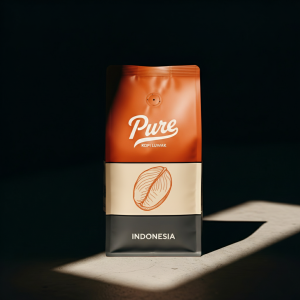
Pure Kopi Luwak
Wild civet coffee from Java. 88.5 SCA cupping score. From $125 for 100g.
The same price-as-filter logic that applies in the United States applies here: anything offered at AUD $50-80 per 100 grams is almost certainly farmed rather than wild, and anything cheaper is suspect. The Melbourne specialty coffee community is generally discerning enough to recognize this, but the problem isn’t boutique cafe customers — it’s online marketplace buyers who find cheap “kopi luwak” listings and assume the label is accurate. It usually isn’t.
Farmed kopi luwak (from caged civets on industrial farms in Indonesia) is significantly cheaper to produce than wild-sourced, and the labeling requirements for imported coffee in Australia don’t require disclosure of production method. The term “kopi luwak” can legally appear on farmed product. A supplier who doesn’t specify “wild-sourced” explicitly, with evidence, is probably not selling wild-sourced product.
Try the coffee this article is about
Wild-sourced from Java, 88.5 SCA cupping score, free US shipping. From $125 for 100g.
Shop Pure Kopi Luwak →Shipping and Customs Into Australia
Coffee beans — including kopi luwak — are a permitted import into Australia. The Australian Border Force’s biosecurity requirements for roasted coffee are straightforward: roasted beans are considered low biosecurity risk because the roasting process addresses pathogen concerns. Declared correctly on a customs form, a 100-gram bag of roasted kopi luwak from Indonesia poses no import difficulty.
Indonesia is a member of ASEAN, and Australia’s existing ASEAN-Australia-New Zealand Free Trade Agreement (AANZFTA) applies reduced tariff rates on Indonesian-origin goods. Indonesia is party to the AANZFTA agreement, which has progressively reduced tariffs on Indonesian goods into Australia — roasted coffee from Indonesian origin benefits from these arrangements. What will always apply is the 10% GST: since Australia removed the low-value import exemption in July 2018, all imported consumer goods are subject to GST regardless of value, collected either by the overseas retailer at checkout (if they’re registered for Australian GST) or at the border. On a $175 AUD bag, that adds approximately $17 AUD — a minor additional cost that’s typically factored into the delivered price quoted at checkout.
In practice, most direct-to-consumer kopi luwak orders from Indonesian-based or Java-based suppliers ship as standard international parcels and arrive in 7-14 days. Some suppliers use EU or US distribution centers, which can expedite delivery but may affect the import duty calculation. If you’re ordering from Pure Kopi Luwak, current shipping details and options for Australian customers are available at checkout.
What Australian Coffee Culture Tells You About Wild Kopi Luwak
Melbourne’s coffee scene has a particular relationship with Indonesian origin. Sumatra and Sulawesi have been menu staples at Melbourne specialty cafes for years — the earthy, full-bodied character of wet-hulled Indonesian coffees suits the local preference for strong, milk-compatible espresso blends. Australian buyers, as a result, tend to understand Indonesian coffee terroir better than most other English-speaking markets. The concept that Java produces a different cup than Sumatra, and that altitude and processing method matter, is less foreign here than it might be in other contexts.
That familiarity is an asset when evaluating kopi luwak. A buyer who already knows what Javanese arabica tastes like — the clean chocolate and stone fruit of a good Java estate at medium roast — has a reference point for understanding what wild civet processing adds to that baseline. The enzymatic modification doesn’t create flavor from nothing; it takes what Java’s highland Arabica already does and removes the bitterness that would otherwise compete with the chocolate and earthiness. The result is distinctive in a way that’s accessible to anyone already oriented toward Indonesian origin coffee.
Is It Worth It for Australian Buyers?
The premium over a quality specialty coffee bag is real. A 100-gram bag of excellent single-origin Javanese arabica from a Melbourne specialty roaster might cost AUD $20-30. Wild kopi luwak from the same island at verified quality runs five to seven times that. The question isn’t whether the product is good — it is — but whether the difference justifies the premium for your specific purpose.
For daily consumption: the premium is hard to justify as a regular purchase unless this is genuinely how you want to spend your coffee budget. For a specific experience — the first tasting of something genuinely unique, a cup shared with someone who takes coffee seriously, a gift that needs to convey real thought — the premium buys something that no other coffee can provide: a flavor profile shaped by biological transformation, not processing technique, and a story that nobody forgets once they’ve heard it. The buyer’s guide to authentic kopi luwak has the full decision framework if you’re still evaluating.
Australian buyers, with their deeper-than-average understanding of Indonesian coffee, tend to appreciate wild kopi luwak more quickly than most. You’re not starting from scratch. You already know that Java produces something interesting. This is what happens to it when it passes through a wild civet first.
Pure Kopi Luwak
Wild civet coffee from Java. 88.5 SCA cupping score. From $125 for 100g.

Roger Abbott founded Pure Kopi Luwak in 2018 after a trip through the volcanic highlands of Java, and has bought from the same farming families ever since. He only works with collectors of wild civet coffee, never caged. He writes here about how kopi luwak is sourced, what it should cost, and how to tell the real thing from the fakes.