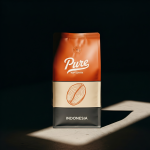
Someone who spends $80 on a bottle of Burgundy for a dinner party has already demonstrated something important: they understand that the price of a beverage can be justified by where it comes from, how it was produced, and what it communicates about the occasion. They’ve internalized the logic of premium. They just haven’t applied it to coffee yet — usually because nobody has explained the connection clearly enough.
Wild kopi luwak is the coffee that wine lovers understand immediately, once they encounter it on the right terms. The vocabulary maps almost perfectly. Terroir, vintage variation, production scarcity, enzymatic transformation, provenance documentation — all of it applies, and none of it requires translation. The coffee gift that works for a wine drinker isn’t the one with the best tasting notes. It’s the one with the most compelling story told in language they already speak.
The Vocabulary Wine Lovers Already Have
A serious wine drinker thinks in terms of origin specificity. They know that a Pinot Noir from Gevrey-Chambertin tastes different from one grown two kilometers north in Morey-Saint-Denis, and they’ve spent time understanding why: the limestone subsoil tilts differently, the elevation shifts slightly, the microclimate changes. They find that granularity interesting rather than excessive. That same orientation applies directly to coffee, and especially to kopi luwak.

Pure Kopi Luwak
Wild civet coffee from Java. 88.5 SCA cupping score. From $125 for 100g.
Wild Javanese kopi luwak is produced on specific highland farms at elevations between 900 and 1,500 meters. The civets that process the cherries forage wild routes through the coffee trees, selecting peak-ripe fruit with a precision that no human sorting operation consistently matches. The processing after collection — washing, drying, green storage — varies by producer and affects the final cup. These are terroir variables. A wine lover recognizes the category of information immediately and asks the right follow-up questions.
The tannin parallel works too. Coffee contains tannins — polyphenolic compounds that contribute to mouthfeel and astringency just as they do in red wine. In low-quality or over-extracted coffee, those tannins manifest as harsh dryness. In wild kopi luwak, whose enzymatic processing during civet digestion reduces the concentration of certain bitterness precursors, the tannic structure is present but softer, more integrated — closer to a well-aged red than a young, gripping Barolo. A wine drinker who registers tannin in a glass of wine will register its absence and presence in a cup of exceptional coffee.
Flavor Bridge: What Wine Drinkers Tend to Appreciate in Kopi Luwak
The flavor profile of wild Javanese kopi luwak leans toward chocolate, earth, and full body with low acidity and low bitterness. That profile maps well onto certain red wine preferences.
Bordeaux and Cabernet drinkers — people who like structure, body, and dark fruit with earthy depth — tend to find wild kopi luwak immediately legible. The same sensory intelligence that identifies cedar and tobacco in a Médoc recognizes the roasted earth and dark chocolate in a medium-roasted Javanese civet coffee. The body registers as satisfying for the same neurological reasons.
White wine drinkers are a slightly different case. If the preference runs toward Burgundy or well-made Chardonnay — weight, texture, complexity, long finish — wild kopi luwak’s full body and smoothness translates. If the preference is for crisp Sauvignon Blanc or Champagne — high acidity, brightness, precision — a cleaner, more acidic specialty coffee might be the better match. Kopi luwak specifically is not that coffee. It’s the equivalent of the heavier, more textured style of winemaking.
The Price Point Makes Sense
A person who regularly spends $40 to $80 on a bottle of wine doesn’t flinch at $125 for 100g of the world’s rarest coffee. The price-per-experience math is actually favorable. A 100g bag of Pure Kopi Luwak yields roughly 15 to 18 cups, depending on brewing method. At $125, that’s under $9 per cup — comparable to a glass of decent wine at a restaurant. For something that is genuinely one of the rarest commercially available food products in the world, that math requires no sales pitch to a wine-literate buyer.
The scarcity argument is also one they’re familiar with. They’ve encountered allocated wines — bottles produced in small quantities that require waiting lists or relationships to acquire. Wild kopi luwak is produced on a similar logic of natural constraint: the annual output is limited by what wild civets actually collect during a given harvest season. No amount of capital investment changes that number. That scarcity is intrinsic, not manufactured.
How to Give This Gift
The coffee gift works best when it comes with context. A wine lover who receives a $125 bag of coffee without explanation might wonder whether the price is justified. A wine lover who receives that same bag with a brief note connecting the terroir, the production method, and the flavor vocabulary they already own will understand immediately what they’re holding.
Pair it with a simple brewing suggestion — French press is the method that preserves body best and mirrors the way wine drinkers approach the experience of a beverage: slowly, with attention, not extracted in 30 seconds under pressure. The long immersion brew and the intentional pour have more in common with decanting than with anything espresso-adjacent. For more on what makes the kopi luwak flavor profile distinctive, see how luwak coffee tastes different from regular coffee.
Pure Kopi Luwak
Wild civet coffee from Java. 88.5 SCA cupping score. From $125 for 100g.

Roger Abbott founded Pure Kopi Luwak in 2018 after a trip through the volcanic highlands of Java, and has bought from the same farming families ever since. He only works with collectors of wild civet coffee, never caged. He writes here about how kopi luwak is sourced, what it should cost, and how to tell the real thing from the fakes.