The most common first-time kopi luwak experience isn’t the one the descriptions promise. It’s a cup that’s unremarkable — flat, sometimes bitter, occasionally just mediocre — followed by the suspicion that the whole thing might be a well-marketed scam. That experience is real. It’s also almost entirely the product of avoidable errors: wrong sourcing, wrong roast, wrong brewing method, wrong expectations. Here’s how to make none of those mistakes.
Mistake 1: Buying From a Marketplace Without Verifying the Source
Online marketplaces carry dozens of products labeled “kopi luwak.” The overwhelming majority of them are either cage-farmed (meaning the civets are confined and fed indiscriminate, often unripe cherries under stress conditions that compromise their digestive chemistry) or mislabeled entirely — ordinary Indonesian coffee with a kopi luwak label and price point. PETA has estimated that up to 80% of commercially labeled “wild” kopi luwak is actually cage-farmed. Marketplace platforms don’t verify these claims, and neither do most importers.
The solution is straightforward: buy from a supplier who explicitly states wild-sourced provenance, names the island of origin (Java, or a specific Indonesian island — not “Southeast Asia” as a generic catch-all), and can explain their supply chain when asked. Vague descriptions — “naturally processed,” “civets in their natural habitat,” origin listed only as “Indonesia” — are indicators to move on. Knowing how to evaluate the sourcing claim is the single most important skill in buying kopi luwak for the first time.
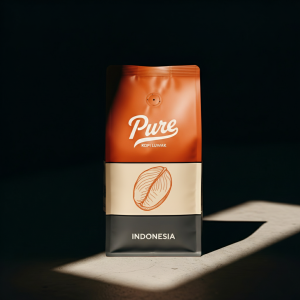
Pure Kopi Luwak
Wild civet coffee from Java. 88.5 SCA cupping score. From $125 for 100g.
Mistake 2: Ordering Ground Coffee
Ground kopi luwak exists, and some buyers choose it for convenience. This is a significant mistake. Roasted coffee beans begin losing volatile aromatics within 30 minutes of grinding — the surface area increase exposes thousands of flavor-active compounds to oxidation simultaneously. For a $35-per-cup coffee, you’re eliminating most of what made the price defensible before the water even touches it.
Whole beans, purchased from a supplier who roasted them within the past few weeks, are the minimum requirement for getting the experience right. If you don’t own a grinder, a basic burr grinder in the $50 to $80 range is a reasonable supporting investment when you’re buying $125 coffee.
Try the coffee this article is about
Wild-sourced from Java, 88.5 SCA cupping score, free US shipping. From $125 for 100g.
Shop Pure Kopi Luwak →Mistake 3: Assuming Dark Roast Is Better Coffee
The specialty coffee world has broadly moved away from dark roasting over the past two decades, because dark roasting is primarily useful for masking defects — once you have genuinely high-quality raw material, dark roasting destroys the nuance you paid for. This applies with particular force to kopi luwak.
The civet’s digestive processing modifies the bean’s protein structure in ways that reduce bitterness and create a smoother cup. Those modifications happen at the molecular level of the green bean. But the volatile aromatic compounds that express that smoothness as flavor in the cup are precisely what dark roasting burns off. A dark-roasted kopi luwak tastes like a dark roast — nothing more. The enzymatic work the civet did is buried under char.
Medium roast is the correct setting for authentic kopi luwak. If a supplier offers only dark roast or doesn’t specify roast level, treat that as a product quality concern.
Mistake 4: Brewing It Like Regular Coffee
French press and moka pot both work with kopi luwak, but they’re not the ideal introduction. French press produces a full-immersion, textured cup with some fine particles in suspension — the result is heavier and less clean than wild kopi luwak’s natural character suggests. Moka pot runs pressurized extraction that can push bitterness at the wrong grind size, undoing the low-bitterness profile that the civet’s processing specifically created.
For a first cup, pour-over or Chemex is the right method. Both use clean filtration and gravity-fed extraction that lets the coffee’s natural smoothness and aromatics come through without interference. The bloom — a 30-second pre-infusion with a small amount of water — is especially dramatic with freshly roasted kopi luwak and releases the volatile aromatics that make the opening pour smell unlike anything else. Start here. You can experiment with other methods once you know what it tastes like at its best.
Mistake 5: Expecting It to Taste Exotic
Kopi luwak’s origin story — coffee beans recovered from civet droppings — generates expectations of something challenging, unusual, or acquired-taste-adjacent. The reality is the opposite. Authentic wild kopi luwak, brewed well from fresh medium-roasted whole beans, tastes like exceptionally clean, smooth coffee. The bitterness that characterizes most coffees is substantially reduced. The finish is mild and lingering. It’s remarkably accessible.
This is worth naming upfront because first-time buyers sometimes interpret “this tastes like good coffee” as a sign they’ve been cheated. They haven’t. The result of the civet’s processing is not an exotic flavor note — it’s the removal of a specific fault (excessive bitterness) that most coffees carry. Authenticity in kopi luwak tastes like coffee minus the parts of coffee you never liked. If your first cup makes you think “this is the smoothest coffee I’ve ever had,” you’ve done it correctly.
The Pre-Purchase Checklist
To summarize the criteria for a first purchase that will actually deliver on the category’s reputation:
- Wild-sourced provenance — not cage-farmed, not vague about sourcing
- Specific Indonesian island origin — preferably Java (Arabica Typica variety)
- Whole bean — not pre-ground
- Medium roast — not dark
- Roasted recently — ideally within the past 2 to 4 weeks
- Supplier who can explain their supply chain when asked
Pure Kopi Luwak sources exclusively from wild civets on Javanese farms, ships whole bean only, and roasts to a medium profile specifically calibrated to let the enzymatic processing express itself in the cup. If you’ve been hesitating because you weren’t sure what to look for, that’s the complete checklist. Buy it, brew it pour-over, and expect smooth and clean rather than unusual and exotic.
The extraordinary part is the smoothness. That’s what you’re paying for. And when you taste it correctly for the first time, it’s entirely worth it.
Pure Kopi Luwak
Wild civet coffee from Java. 88.5 SCA cupping score. From $125 for 100g.
Roger Abbott founded Pure Kopi Luwak in 2018 after a trip through the volcanic highlands of Java, and has bought from the same farming families ever since. He only works with collectors of wild civet coffee, never caged. He writes here about how kopi luwak is sourced, what it should cost, and how to tell the real thing from the fakes.