André and Édouard Michelin published their first restaurant guide in 1900, initially as a way to encourage French motorists to drive more and wear out their tires. The stars came later, in 1926, added because the inspectors realized they needed a way to distinguish the very good from the exceptional. By the time the guide covered Europe and then Asia and North America, its ratings had become the most consequential quality signal in the restaurant industry. As of 2025, 156 restaurants worldwide hold three Michelin stars — the highest designation, described by the guide as “exceptional cuisine that is worth a special journey.” Chefs have wept at the announcement of a star. Some have requested to be removed from consideration. The rating is, by any measure, serious.
Michelin rates on five criteria, applied identically across every country and cuisine: quality of ingredients, mastery of cooking and culinary technique, harmony of flavors, the personality of the cuisine as expressed in the dishes, and consistency across visits. Service, décor, and price are explicitly excluded from the calculation. What the star measures is what’s on the plate — and by extension, what went into making it.
Coffee doesn’t have a Michelin rating system. It has the SCA’s Q-grading protocol, the Cup of Excellence, various national barista championships, and a sprawling ecosystem of specialty roasters who produce their own hierarchy of distinction. But apply Michelin’s five criteria to the world of premium coffee beans — treating the cup as the dish — and something interesting emerges about where wild kopi luwak sits in the landscape.
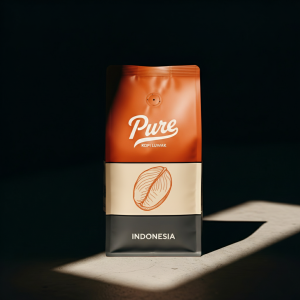
Pure Kopi Luwak
Wild civet coffee from Java. 88.5 SCA cupping score. From $125 for 100g.
Quality of Ingredients
Michelin’s first criterion is the ingredient itself — its provenance, its condition, the care taken in its selection. In restaurant terms, this is the difference between farmed salmon and wild-caught, between a tomato picked this morning and one that spent a week in a cold chain.
Wild kopi luwak begins with a pre-sorting process that no other coffee category can claim. Free-roaming Asian palm civets in Java’s highland coffee farms are selective foragers: they consume only peak-ripe cherries, identified by smell and taste, passing over under-ripe or over-fermented fruit. The Brix content of cherries they select — the measure of dissolved sugar in the pulp — falls consistently in the 18-22 degree range that represents optimal ripeness. Human harvesters, even the most careful ones, can’t match this selectivity at scale. A single civet processes fifty to a hundred individual cherries in a night’s foraging; each one evaluated individually. The ingredient quality before roasting begins is effectively pre-certified by the animal’s own biology.
For Michelin’s first criterion, this is a strong case — possibly the strongest in coffee.
Try the coffee this article is about
Wild-sourced from Java, 88.5 SCA cupping score, free US shipping. From $125 for 100g.
Shop Pure Kopi Luwak →Mastery of Technique
This is where wild kopi luwak’s case becomes more complicated. The “technique” involved — civet digestion and the enzymatic modification of the bean — is not something that can be mastered in the traditional sense. No roaster is controlling the proteolytic activity in a civet’s stomach. No processor is calibrating the duration of fermentation with a timer. The technique is biological, not culinary, and it happens outside any human craftsperson’s control.
What can be mastered is the handling after collection: washing and drying the beans without introducing contamination, roasting to the medium profile that preserves the enzymatic modifications without destroying them (wild kopi luwak typically comes out of first crack at a bean temperature of 196-200°C, notably lower than conventionally processed Arabica from the same origin), and packaging in conditions that prevent the rapid oxidation that would undo the careful preparation.
Michelin would likely award points for the technique that governs these post-collection phases, and might simply note that the pre-collection “technique” is biologically delegated — an unusual situation, but not necessarily a disqualifying one. The criterion evaluates the mastery of what’s being done, not whether a human being is doing it.
Harmony of Flavors
Here, wild kopi luwak is almost unassailable. The hallmark of genuinely wild-sourced civet coffee from Java is a flavor profile that is internally consistent in a way that most coffees aren’t: the bitterness is low, the acidity is softened, the body is full, the finish is long and earthy without any of the fermentation-adjacent flavors that cheaper versions carry. Coffee professionals who taste it describe a chocolate-forward cup that doesn’t fight itself — no sharpness competing with sweetness, no off-notes undercutting the body. The harmony is the product of the processing; civet digestion normalizes the bean’s chemistry in a way that produces unusual coherence.
This is what the competition circuit penalizes (low acidity, modest aromatics) and what Michelin’s flavor-harmony criterion would reward. The cup makes sense from first sip to finish.
Personality of the Cuisine
Michelin’s fourth criterion is perhaps the most interesting to apply to coffee: does the product express a distinct, recognizable identity? Can you taste where it came from, who made it, and why it’s different from everything else in the category?
Wild kopi luwak has an answer to this that is, as far as any coffee goes, unambiguous. It comes from one of the most specific origins in the world — free-roaming civets on known Javanese farms — processed by a method that has been practiced for centuries and can’t be meaningfully replicated by any other means. You cannot make wild kopi luwak taste like this using synthetic enzymes or controlled fermentation. The personality of the product is its origin and its method, inseparably fused. Every cup is the record of a specific animal making a specific choice in a specific place. That’s personality in the most literal possible sense.
Consistency
Michelin inspects restaurants multiple times and will remove a star if standards slip. Consistency is the criterion that eliminates the excellent-sometimes category. For wild kopi luwak, this is both a strength and an acknowledged limitation. Seasonal variation exists — the ripeness of the harvest, the particular population of civets on a given farm, the weather conditions during drying all influence the cup. These are the same variables that create vintage variation in wine, and they’re generally treated as a feature of natural products rather than a defect.
What a reputable source of wild kopi luwak controls is consistency of standard within a season: the same sourcing criteria, the same washing and drying protocols, the same roast profile. The cup you buy today from a trusted wild-sourced supplier should taste substantively similar to the cup you bought six months ago. That’s the relevant consistency — not lot-to-lot uniformity (which wine doesn’t have either), but producer-standard reliability.
What Star It Would Earn
Michelin’s three-star definition: “exceptional cuisine that is worth a special journey.” That framing — worth a special journey — is precisely how wild kopi luwak has been talked about by the people who seek it out. You don’t stumble across the genuine article by accident. You look for it, you pay attention to sourcing, you brew it deliberately. The product is worth the effort. Whether Michelin would award one star, two, or three depends on an inspection the guide will never conduct — but the criteria, applied honestly, don’t point toward anything lower than one.
Pure Kopi Luwak
Wild civet coffee from Java. 88.5 SCA cupping score. From $125 for 100g.

Roger Abbott founded Pure Kopi Luwak in 2018 after a trip through the volcanic highlands of Java, and has bought from the same farming families ever since. He only works with collectors of wild civet coffee, never caged. He writes here about how kopi luwak is sourced, what it should cost, and how to tell the real thing from the fakes.