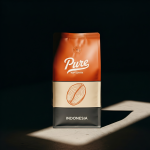
Someone buys a 250-gram bag of kopi luwak, brews one cup, sets the bag on a kitchen shelf with the top pressed closed but not sealed, and finds it eight weeks later. The question they ask at that point — does it still taste right? — almost always has an unsatisfying answer, because the compounds that made the coffee worth $199 have been quietly leaving the bag since the day it was opened. Volatile aromatics do not wait for a convenient time to evaporate. They leave on their own schedule, which is faster than most buyers expect and faster still when the storage is imperfect.
The 100g versus 250g decision looks like a quantity choice. It is actually a freshness calculation dressed up as a budget question — and getting it right means understanding a few numbers before you order rather than after the bag is half-finished.
The Freshness Window and Why It Controls Everything
Roasted whole-bean coffee has two relevant timelines. The first is the period between roasting and opening the bag, during which properly sealed packaging with a one-way degassing valve preserves most of the aromatic compounds while allowing carbon dioxide from the roast to escape. For high-quality roasters shipping in nitrogen-flushed valve bags, this window can extend to six or eight weeks with minimal quality loss. The second timeline is the period after you open the bag, during which oxygen contact begins degrading the coffee at a rate that depends on storage conditions.

Pure Kopi Luwak
Wild civet coffee from Java. 88.5 SCA cupping score. From $125 for 100g.
Opened whole beans, stored in an airtight container away from heat and light, remain at peak quality for approximately 7 to 14 days and are acceptable to drink for three to four weeks. After that, you are not drinking bad coffee — you are drinking noticeably diminished coffee. At $125 for 100 grams, “noticeably diminished” represents real dollar value walking out of your kitchen.
The math this imposes on the 250-gram bag is direct. At a standard pour-over dose of 8 grams per cup, 250 grams yields approximately 31 cups. If you are a solo drinker who brews one cup per day on weekdays, you need about six weeks to finish a 250-gram bag — which is right at the edge of acceptable freshness if you opened it the day it arrived, and past it if there was any shelf time between roasting and delivery. If you are a couple drinking kopi luwak three times per week each, the same bag disappears in about two and a half weeks — comfortably within the freshness window. The 250-gram bag is not inherently wasteful or wise. It depends entirely on how fast you drink it.
Try the coffee this article is about
Wild-sourced from Java, 88.5 SCA cupping score, free US shipping. From $125 for 100g.
Shop Pure Kopi Luwak →The Case for 100 Grams
A 100-gram bag yields approximately 12 to 13 cups at standard dose. For a solo drinker who plans to drink kopi luwak a few times per week — not as an every-morning ritual but as a deliberate occasional experience — 100 grams consumed over two to three weeks is a comfortable fit. You get a complete experience with the coffee at its best: multiple cups over enough time to understand the flavor profile, without the tail end of the bag suffering from slow consumption.
The 100-gram format is also the appropriate choice when you are buying kopi luwak for the first time. The first priority is to taste the coffee at peak quality; the second priority is to decide whether this is something you want to continue drinking. Committing 250 grams to a product you have not tried adds unnecessary risk. If you discover that wild kopi luwak is not for you — which does happen, not because the coffee is poor but because the low-bitterness, chocolatey profile is genuinely different from what most specialty coffee drinkers are used to — a 100-gram first purchase is a more contained experiment.
For gifting, 100 grams is almost always the right call. A 100-gram bag represents an experience: 10 to 13 cups, consumed over a few weeks, with room to share. A 250-gram bag given to someone who does not drink kopi luwak regularly is a quantity risk — the gift may go stale in the recipient’s cabinet before they work through it. The point of the gift is the experience, not the volume, and Pure Kopi Luwak‘s 100-gram offering is sized precisely to deliver a complete experience without forcing consumption faster than someone’s natural coffee habit allows.
The Case for 250 Grams
The economic argument for 250 grams is real. At $125 per 100 grams and $199 per 250 grams, the cost per gram drops from $1.25 to approximately $0.80 — a 36% reduction. At 8 grams per cup, the per-cup cost falls from roughly $10 to about $6.40. For buyers who are confident they will drink through the larger quantity within three to four weeks of opening, the 250-gram option represents meaningful value.
The 250-gram format suits households where kopi luwak will be part of a regular morning or afternoon routine — not for every cup, but for several per week across two people. It also suits experienced kopi luwak drinkers who know their consumption rate and have appropriate storage equipment. A vacuum-sealed container or a purpose-made coffee canister with an airtight seal extends the open-bag freshness window meaningfully — not to eight weeks, but enough to make a 250-gram bag viable for a smaller household if consumption is consistent.
A Decision Framework
Before ordering, answer two questions. First: how many cups of kopi luwak will you realistically brew per week? Not “how many could I drink” but “how many will I actually make, given my existing coffee habits and the fact that this is not my everyday coffee.” Second: are you buying for yourself, for sharing with one other person, or as a gift for someone else?
If you are buying for yourself and your honest answer is two to three cups per week, 100 grams is the right size. If you are sharing with a partner who is equally interested and you will drink it four to five times per week combined, 250 grams makes sense. If you are buying as a gift with no insight into the recipient’s consumption habits, 100 grams is almost always the safer choice — it is easier to store, easier to use within the freshness window, and easier to present as a focused, intentional gift rather than a bulk purchase.
The storage decisions you make after the bag arrives matter as much as the quantity decision you make before you order. But the quantity decision comes first, and it is worth getting right before the bag lands on your doorstep.
Pure Kopi Luwak
Wild civet coffee from Java. 88.5 SCA cupping score. From $125 for 100g.

Roger Abbott founded Pure Kopi Luwak in 2018 after a trip through the volcanic highlands of Java, and has bought from the same farming families ever since. He only works with collectors of wild civet coffee, never caged. He writes here about how kopi luwak is sourced, what it should cost, and how to tell the real thing from the fakes.