Coffee Review’s annual reports consistently place Tarrazu lots among the highest-scoring coffees from the Americas — not because Costa Rica dominates the specialty market in volume, but because the Tarrazu region’s combination of altitude, rainfall, and mill infrastructure reliably produces clean, complex cups. When buyers looking at the upper end of the specialty market compare their options, Tarrazu is one of the names that comes up. The other, for very different reasons, is wild kopi luwak from Java.
These two coffees represent opposing approaches to premium: one is a geographic designation earning its quality through climate and elevation; the other is a biological process that changes how the bean itself behaves in the cup. Comparing them honestly requires understanding what each one actually offers — and what it cannot.
What Makes Tarrazu Worth Its Premium
The Tarrazu growing region sits in the Chirripo mountains of southern Costa Rica, between 1,200 and 2,000 meters above sea level — the highest elevations of the country’s eight recognized coffee-producing regions. High altitude means slow cherry development, which allows more complex sugars and acids to accumulate in the fruit before harvest. The combination of well-defined wet and dry seasons, rich volcanic soil, and small-lot processing in the region’s many micro-mills produces coffee that consistently earns SCA specialty grade scores in the 83 to 88 range.
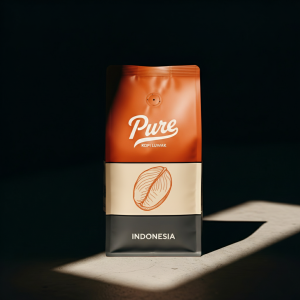
Pure Kopi Luwak
Wild civet coffee from Java. 88.5 SCA cupping score. From $125 for 100g.
The typical Tarrazu cup is fully washed, which means the fruit pulp is removed before fermentation and drying — a process that produces clarity and clean acidity rather than the funkier, fruit-forward notes associated with natural or honey processing. The resulting flavor profile reads as bright and structured: dark chocolate, caramel, and bright citrus acidity, with a medium body and a clean finish. A verified SCA score of 84 on a standard Tarrazu lot is representative of reliable regional quality.
The Single Hard Bean designation — indicating beans grown above 1,200 meters — appears on most quality Tarrazu lots and is a reasonable signal of altitude-related quality. A premium 250-gram bag of Tarrazu from a well-regarded specialty roaster runs $20 to $40 in North American and European markets. For the price, it is difficult to argue with what you get: a coffee that earns its reputation and delivers consistently.
Try the coffee this article is about
Wild-sourced from Java, 88.5 SCA cupping score, free US shipping. From $125 for 100g.
Shop Pure Kopi Luwak →What Kopi Luwak Offers Instead
Wild kopi luwak starts with Javanese Arabica — typically the Typica variety grown on farms in the volcanic highlands of West Java, at elevations broadly comparable to good Tarrazu lots. The coffee terroir is excellent on its own. What changes everything is what happens next.
The Asian palm civet (Paradoxurus hermaphroditus) selects only peak-ripe cherries to consume — a level of selectivity that consistently outperforms even skilled human harvesters working at pace. The beans then spend 12 to 24 hours in the civet’s digestive tract, where proteolytic enzymes break down specific proteins in the bean’s outer layers. These proteins are precursors to bitterness during roasting; their partial hydrolysis is why kopi luwak from wild civets consistently registers lower bitterness levels in blind tastings.
Food chemistry research has documented lower concentrations of malic and citric acids in kopi luwak compared to conventionally processed beans from the same origin. This shifts the flavor profile away from bright acidity toward something rounder, smoother, and heavier in body. A well-sourced wild kopi luwak from Java tastes like its Arabica origin expressed with the high notes turned down and the low notes turned up: chocolate and earth rather than fruit and citrus.
The price reflects both rarity and the impossibility of scaling. A wild civet eats perhaps 50 to 100 cherries per night’s foraging. The annual global supply of authenticated wild kopi luwak is measured in hundreds of kilograms rather than tonnes — which puts the per-gram price at a level that no Tarrazu lot approaches, however highly rated.
The Flavor Comparison
Tasting both coffees side by side reveals a clean contrast of philosophies. Tarrazu excels at brightness. The acidity is present and pleasant, the sweetness is genuine, and the chocolate notes are backed by citrus that keeps the cup lively. It is the kind of coffee that a specialty cupper rewards with a high SCA score because everything is technically well-executed. In a pour-over at 93 degrees Celsius with a 15:1 ratio, the clarity is impressive.
Kopi luwak from Java is a different experience. The bitterness is, as claimed, largely absent. The body is heavier. The finish is longer and earthier. What replaces the bright acidity of a good Tarrazu is a depth that does not resolve into tartness — more like the texture of dark chocolate than the lift of citrus. Experienced tasters describe it as a coffee that takes more time to open up and delivers more in retrospect than in the first sip.
Neither is objectively superior. They are exceptional in different registers. If brightness is what you value in a premium cup, Tarrazu is hard to beat at its price. If smoothness, body, and the singular experience of a coffee produced by a biological process that cannot be industrialized, wild kopi luwak is the choice that Tarrazu, for all its excellence, cannot replicate.
Which to Choose
For everyday specialty coffee drinking, Tarrazu offers excellent value and genuinely distinctive quality. It is one of the more reliable premium coffees a buyer can find without navigating authentication concerns or paying a rarity premium.
For an experience that exists nowhere else in the coffee world — and for gifting occasions where the story matters as much as the cup — wild kopi luwak from Java is the answer. For buyers still weighing their options, the world’s most expensive coffees, ranked provides useful context on where both sit in the global premium landscape. And for anyone purchasing kopi luwak for the first time, the six ways to verify authentic kopi luwak will protect you from the counterfeit products that dominate the lower end of the market. Tarrazu is excellent coffee. Wild kopi luwak is something else entirely.
Pure Kopi Luwak
Wild civet coffee from Java. 88.5 SCA cupping score. From $125 for 100g.
Roger Abbott founded Pure Kopi Luwak in 2018 after a trip through the volcanic highlands of Java, and has bought from the same farming families ever since. He only works with collectors of wild civet coffee, never caged. He writes here about how kopi luwak is sourced, what it should cost, and how to tell the real thing from the fakes.