In February 2016, a small coffee company from Saratoga Springs, New York aired a 30-second commercial during Super Bowl 50 — an ad slot worth more than $5 million — after winning a contest for small businesses run by Intuit. Death Wish Coffee, founded in 2012 by Mike Brown, used the exposure to cement its position as the self-proclaimed “world’s strongest coffee,” a brand built on one verifiable number: approximately 728 milligrams of caffeine per 12-ounce cup, according to independent testing by caffeine analysis labs. For context, a standard cup of Starbucks Pike Place roast contains roughly 235 milligrams in the same volume. Death Wish contains about three times more.
Kopi luwak, on the other hand, is built on a different kind of superlative: not the most caffeine, but the most transformation. The comparison is worth understanding before you spend money on either.
What Death Wish Coffee Actually Is
Death Wish’s high caffeine content comes primarily from its choice of beans and roast level. The blend uses both Arabica and Robusta varieties — Robusta beans naturally contain roughly twice the caffeine of Arabica, at approximately 27mg per gram versus 12mg per gram for Arabica. Combined with careful sourcing for high-caffeine specimens and a proprietary roasting process, Death Wish achieves caffeine concentrations that genuinely exceed any mainstream specialty coffee.
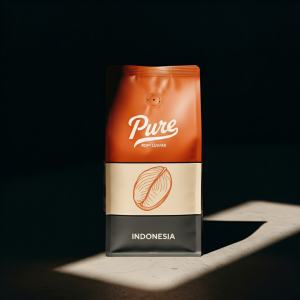
Pure Kopi Luwak
Wild civet coffee from Java. 88.5 SCA cupping score. From $125 for 100g.
The flavor profile is deliberately adapted to match the branding. Death Wish’s roast is dark — described on the packaging as bold with notes of cherry and chocolate. Dark roasting develops the bold, bitter-forward flavors that most people associate with “strong” coffee, though it also reduces caffeine slightly (the Maillard reaction breaks down some caffeine at extreme temperatures), which makes the actual caffeine numbers even more remarkable. The result is a coffee that fulfills its promise: you will feel more caffeinated than usual, quickly, and for a sustained period.
Whether that experience constitutes quality in the specialty coffee sense is a separate question. Death Wish isn’t trying to compete with Gesha or Yirgacheffe on flavor complexity. It’s competing with energy drinks on function — and winning.
Try the coffee this article is about
Wild-sourced from Java, 88.5 SCA cupping score, free US shipping. From $125 for 100g.
Shop Pure Kopi Luwak →What Kopi Luwak Is Built On
Wild kopi luwak from Java’s highland farms occupies the opposite end of the premium coffee spectrum. Where Death Wish maximizes a single measurable variable — caffeine content — wild-sourced kopi luwak emerges from a transformation process that changes multiple variables simultaneously and in ways that can’t be engineered in a roasting facility.
The Arabica Typica variety used in wild kopi luwak contains approximately 1% caffeine by dry weight — lower than Robusta and at the moderate end of Arabica. A standard pour-over cup delivers 80 to 100 milligrams of caffeine. That’s about one-seventh the caffeine of a Death Wish cup by independent testing. Anyone switching from Death Wish to kopi luwak looking for the same stimulant effect will be disappointed.
What they won’t be disappointed by is what the civet’s digestive chemistry does to the bean. Proteolytic enzymes in the civet’s gut break down proteins that are bitter precursors during roasting, producing a finished cup with measurably lower phenolic content and reduced citric and malic acid levels compared to washed-process beans from the same farms. The flavor is smooth in a way that high-roast dark coffees can’t replicate — because darkness and smoothness in coffee are not the same thing, and kopi luwak achieves its characteristic lack of bitterness through biology, not heat.
The Buyer’s Decision
The buyers who reach for Death Wish and the buyers who seek out wild kopi luwak are solving different problems.
Death Wish coffee is for people who want coffee to function aggressively — who need serious caffeine to push through a long shift, a demanding deadline, or a prolonged creative session and don’t care whether the cup is subtle. It does exactly what it says, at a mainstream price point that makes it accessible without ceremony. This is an honest product for an honest use case.
Wild kopi luwak is for people who want to understand what coffee can taste like when process, terroir, and biology align perfectly. It’s for the person who has had excellent Yirgacheffe and Panama Gesha and wants to know what happens at the further edge of premium — when the bean has been selected by a wild animal’s sense of smell, transformed by its digestive chemistry, and roasted with restraint to let that transformation speak clearly. The caffeine delivers alertness. The flavor delivers something harder to find.
The comparison between the two isn’t really a question of which coffee is better. It’s a question of what you’re optimizing for. If you want maximum caffeine in a familiar bold format, Death Wish Coffee is an efficient choice. If you want the most carefully transformed cup of coffee available at any price, that question has a different answer — and it’s been answered by the buyers who’ve tried both.
One More Thing Worth Noting
Death Wish’s marketing power has made “world’s strongest coffee” a household phrase. Kopi luwak’s marketing story — an animal selects the ripest cherries in a Javanese forest, processes them through biology, and produces a cup unlike any other — is actually more interesting. The problem is that it takes more than 30 seconds to tell. That’s not a flaw. It’s a filter. The buyers who take the time to understand what wild civet cherry selection actually does to coffee quality are the ones who end up spending $125 on 100 grams and wondering why they waited so long.
Pure Kopi Luwak
Wild civet coffee from Java. 88.5 SCA cupping score. From $125 for 100g.
Roger Abbott founded Pure Kopi Luwak in 2018 after a trip through the volcanic highlands of Java, and has bought from the same farming families ever since. He only works with collectors of wild civet coffee, never caged. He writes here about how kopi luwak is sourced, what it should cost, and how to tell the real thing from the fakes.