Ippodo Tea Co. has occupied the same address in Kyoto’s Teramachi district since 1717 — three centuries of selling tea to the same city, with a customer base that includes the imperial household and the most demanding matcha drinkers in the world. Their top ceremonial grade matcha, shade-grown tencha leaf from Uji and Nishio, stone-ground in low-temperature mill rooms to preserve chlorophyll and aromatic compounds, retails for roughly $37 for 40 grams. At a traditional 2-gram preparation, that’s $1.85 per bowl. At the upper end of the ceremonial market — Matchaful’s single-origin Hikari grade from Kagoshima, $86 per 100 grams — the cost reaches comparable territory to premium specialty coffee, and the buyer profile begins to look familiar: someone willing to pay significantly more for something significantly better, and interested in where that difference actually comes from.
Both ceremonial matcha and wild kopi luwak occupy the same unusual market position: products where the price premium is justified not by branding alone but by transformations that happen before the product is ever packaged. The comparison between them rewards closer examination.
How Each Product Gets Its Character
Ceremonial grade matcha’s distinctive qualities — the vivid green color, the sweet umami note, the L-theanine content that modulates caffeine absorption — come from a single decision made weeks before harvest: shading the tea plants. For three to four weeks before picking, tencha-destined plants are covered with shade cloths that reduce direct sunlight by 70 to 90 percent. The plant responds to reduced light by producing more chlorophyll (darkening the leaves) and more L-theanine (an amino acid that functions as a mild anxiolytic). The result is a leaf chemically different from the same plant grown in full sun — and ground to a fine powder, a cup different in effect from black tea or green tea made from the same species.
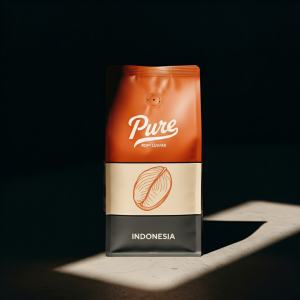
Pure Kopi Luwak
Wild civet coffee from Java. 88.5 SCA cupping score. From $125 for 100g.
A quality ceremonial matcha prepared properly — whisked with 70°C water, at a 1:30 ratio — delivers approximately 35mg of caffeine per 2-gram serving alongside roughly 25mg of L-theanine. The L-theanine is believed to modulate how the caffeine is absorbed, producing a sustained, calm alertness that matcha enthusiasts describe as distinctly different from coffee’s sharper stimulation. This combination has become attractive enough that ceremonial matcha sells successfully in the same markets as specialty coffee despite costing considerably more per serving.
Wild kopi luwak arrives at its character through a different kind of pre-processing transformation. When an Asian palm civet (Paradoxurus hermaphroditus) digests a coffee cherry in the highland forests of Java, proteolytic enzymes in its digestive tract begin breaking down specific proteins — precursors to the bitter phenolic compounds that form during roasting. The result is a bean that, when roasted at medium heat, delivers measurably lower bitterness and reduced citric and malic acid content compared to conventionally processed beans from the same farms. The caffeine content of the Arabica Typica variety used — roughly 1% by weight — produces approximately 80 to 100mg per standard pour-over cup.
Both transformations are achieved through natural biological processes operating on carefully selected raw material. Neither is the result of additives, fortification, or industrial processing. This shared characteristic — quality built into the material before any human processing begins — is part of why buyers who love ceremonial matcha tend to understand wild kopi luwak intuitively.
Try the coffee this article is about
Wild-sourced from Java, 88.5 SCA cupping score, free US shipping. From $125 for 100g.
Shop Pure Kopi Luwak →The Morning Ritual Question
The buyers who invest in Ippodo matcha and the buyers who invest in wild-sourced kopi luwak are typically looking for the same thing: a morning experience that rewards attention, delivers something measurably different from the commodity version, and justifies the premium through the cup itself rather than through the marketing around it.
They diverge on what they want the cup to feel like. Ceremonial matcha delivers a gentle, sustained energy — lower caffeine than most coffee, modulated by L-theanine, with a profile that many practitioners describe as conducive to focused work without the aggressive stimulation that can accompany a standard coffee. It’s the beverage that Japanese tea ceremony culture chose specifically because of its effects on mental state. The ritual around it — the whisk, the bowl, the temperature precision — amplifies the intentionality of the experience.
Wild kopi luwak delivers more caffeine, but the character of that caffeine effect is notably smooth compared to standard specialty coffee. The lower bitterness and reduced acid content affect not just flavor but how the cup lands physiologically. Buyers describe an alertness that arrives without the spike — attributable to the enzymatic modification of compounds that typically produce caffeine’s harsher edges in standard Arabica. The pour-over preparation that best suits wild kopi luwak — careful bloom, controlled pour, full appreciation of a cup yielding approximately $12 per serving — demands the same attentiveness the matcha ceremony requires.
Which to Choose
If your priority is the calmest, most modulated kind of morning alertness — close to meditation, deliberately slow, with lower caffeine content by design — ceremonial grade matcha from a reputable Japanese producer is genuinely excellent. The shading process produces something that Arabica beans cannot replicate.
If your priority is the most complex, most transformatively processed cup of coffee available at any price, with a smooth caffeine effect and flavor notes that serious tasters describe as unlike anything else in the category, wild kopi luwak is the answer. To understand precisely what that tastes like — the chocolate base, the low acidity, the lack of any bitter finish — the complete flavor guide covers what experienced drinkers actually report. And for buyers curious about the pour-over method that best reveals those qualities, the pour-over guide provides the specifics.
The two beverages are not competing for the same cup. They’re competing for the same morning — and that’s a decision only the drinker can make.
Pure Kopi Luwak
Wild civet coffee from Java. 88.5 SCA cupping score. From $125 for 100g.

Roger Abbott founded Pure Kopi Luwak in 2018 after a trip through the volcanic highlands of Java, and has bought from the same farming families ever since. He only works with collectors of wild civet coffee, never caged. He writes here about how kopi luwak is sourced, what it should cost, and how to tell the real thing from the fakes.