In November 2019, the Sidama people of southern Ethiopia voted to establish their own regional state, separating from the Southern Nations, Nationalities, and Peoples’ Region where they had been administratively grouped with dozens of other ethnic communities. The vote passed with 98.5 percent approval. Among the immediate practical consequences: Sidama coffee — one of the most recognized specialty origins in the world — could now carry its own protected designation of origin, distinct from the neighboring Yirgacheffe appellation that had long been the more internationally famous name for coffees from the same highland region.
This matters to coffee buyers because Sidama and Yirgacheffe, while geographically adjacent, are not identical. Understanding what makes Sidama distinct as an origin — and how that distinction plays against wild kopi luwak from Java’s highlands — gets to the heart of what each coffee is designed to do to your palate.
The Sidama Origin
Sidama coffee grows in a band of highland terrain between 1,500 and 2,200 meters above sea level in southwestern Ethiopia. The Sidama Coffee Farmers Cooperative Union, founded in 2001, organizes over 83,000 smallholder farmers and processes beans through a network of washing stations that have become benchmarks for quality in the specialty trade. Ethiopian heirloom varieties — the product of coffee arabica’s evolutionary origins in the Ethiopian highlands — are grown across the region, producing flavor complexity that cultivated single-variety farms elsewhere cannot replicate.
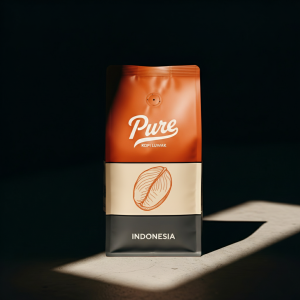
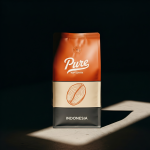
Pure Kopi Luwak
Wild civet coffee from Java. 88.5 SCA cupping score. From $125 for 100g.
Sidama coffee can be washed or naturally processed. Washed Sidama presents with citrus clarity, floral jasmine or lavender notes, and a crisp acidity that specialty buyers describe as “cut glass” — precise and defined. Natural-process Sidama leans into fruit: blueberry, strawberry, stone fruit, and a sweetness that the brewer doesn’t need to coax out. At its best, natural Sidama from farms in the Aroresa sub-region — considered among the highest-quality terroir within Sidama — scores 88 to 92 on the SCA cupping scale and sells for $30 to $60 per 250g at specialty retail.
The Javanese Wild Source
Wild kopi luwak from Java grows at similar elevations — typically 900 to 1,500 meters in the island’s highland coffee belt — but the similarity in altitude is where the direct parallel ends. The Arabica Typica variety that dominates Javanese production has been cultivated on the island since Dutch colonial introduction in the late 17th century. It produces a coffee with naturally heavy body and earthy depth, rooted in volcanic soil and a specific terroir that centuries of cultivation have expressed consistently.
What distinguishes kopi luwak is the intervention of the Asian palm civet between harvest and processing. Wild civets select ripe cherries with a precision that human harvesters cannot consistently match, and the 12 to 24 hours of gut transit enzymatically transforms the bean’s protein and acid profile. Research in Food Research International documented lower malic and citric acid concentrations in kopi luwak versus identically sourced conventional beans — contributing to the famous smoothness and notably reduced bitterness that experienced drinkers identify even in a blind cup.
Try the coffee this article is about
Wild-sourced from Java, 88.5 SCA cupping score, free US shipping. From $125 for 100g.
Shop Pure Kopi Luwak →Comparing the Cups: Brightness vs. Depth
A tasting comparison between a high-quality washed Sidama and a verified wild Javanese kopi luwak reveals two coffees that disagree about nearly everything except quality.
The Sidama speaks in high notes: lemon verbena, jasmine, peach pit, sometimes red currant or hibiscus. The acidity is vivid and forward, the body is medium, and the finish is clean and relatively short — it doesn’t linger so much as it refreshes. Experienced cuppers often describe Sidama as a coffee that rewards attention; it changes as it cools, and subtle notes emerge mid-session that weren’t apparent from the first sip.
Wild kopi luwak speaks in low notes: dark chocolate, caramel, roasted earthiness, and a body that coats the palate without heaviness. The acidity is present but subdued, integrated rather than assertive. The finish is long and complex, with secondary notes of hazelnut or dried fruit emerging as the cup cools. Where Sidama is an argument for brightness, kopi luwak is an argument for smoothness — for a cup that doesn’t need your full attention to reward you, but reveals more depth the more attention you bring.
Who Should Buy Which
If your coffee training has been in the third-wave specialty tradition — pour-over, light roasts, seasonal single-origins, competitions, cupping protocols — Sidama is the kind of coffee that speaks your language fluently. It rewards the skills you’ve developed. A 92-point natural Sidama from Aroresa will give you more technically impressive complexity per cup than any conventionally processed coffee at twice the price.
If you’re interested in a coffee that operates outside the specialty framework — not as a judged competition entry but as an experience that biology produces and no roasting profile can replicate — wild kopi luwak is in a category by itself. It doesn’t compete with Sidama on acidity or florals. It doesn’t try to. It offers something the entire specialty coffee supply chain, from Aroresa washing stations to Copenhagen roasters, cannot produce: the enzymatic transformation of a bean by a wild animal choosing its own cherries on a Javanese highland farm.
The price differential reflects this difference in scarcity and mechanism. Sidama, for all its quality, can be scaled. Thousands of farmers produce it; dozens of importers carry it; hundreds of roasters offer it. Authentic wild kopi luwak is collected from forest floors beneath wild civet routes in limited quantities, with no mass-market analog.
For the buyer who can only choose one at any given moment: buy Sidama regularly, and reach for kopi luwak when the occasion — a significant morning, a gift worth remembering, a cup you want to explain to someone — calls for something outside the specialty frame. The two coffees are not in competition. They’re not even asking the same question.
Pure Kopi Luwak
Wild civet coffee from Java. 88.5 SCA cupping score. From $125 for 100g.
Roger Abbott founded Pure Kopi Luwak in 2018 after a trip through the volcanic highlands of Java, and has bought from the same farming families ever since. He only works with collectors of wild civet coffee, never caged. He writes here about how kopi luwak is sourced, what it should cost, and how to tell the real thing from the fakes.