On March 20 or 21 of each year — the exact moment of the spring equinox, measured to the second — approximately 300 million people around the world mark the first moment of Nowruz (نوروز), the Persian New Year. The celebration runs for thirteen days and ends with Sizdah Be-dar, a day spent outside to shake off bad luck before the new year settles into its groove. In the thirteen days between those two endpoints, there are visits, meals, new clothes, a Haft-seen table arranged with seven symbolic items (sabzeh for rebirth, samanu for strength, senjed for love, sib for health, somaq for sunrise, serkeh for patience, sekke for prosperity), and gifts — always gifts, moving between generations and households like water finding its level.
The conventional Nowruz gift runs toward saffron, pistachios, premium dried fruits, fine sweets, gold. All of these make sense within a tradition that prizes quality and craftsmanship as signals of genuine regard. What makes wild kopi luwak an ideal addition to that vocabulary is not novelty for its own sake — it’s the convergence of rarity, care, and origin. A bag of wild-sourced kopi luwak from Java is not a whimsical choice. It’s a historically coherent one.
The Persian Relationship With Premium Beverages
Iranian coffee culture has deep roots, though the outside world sometimes overlooks them in favor of the country’s association with tea. Iran imports approximately 30,000 tons of coffee annually, and the specialty coffee segment has grown sharply since the mid-2010s — Tehran’s café scene now includes dozens of specialty roasters and barista competitions that draw participants who would hold their own at any international event. Coffee is not foreign to Persian gift-giving; it’s simply underrepresented in the Western imagination of what Iranians drink.
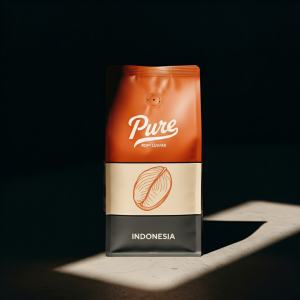
Pure Kopi Luwak
Wild civet coffee from Java. 88.5 SCA cupping score. From $125 for 100g.
The Nowruz tradition of bringing premium food and drink to someone’s home aligns precisely with what wild kopi luwak is: something produced in small quantities, by careful hands, from a wild and irreproducible process. Java’s palm civets select peak-ripe coffee cherries by instinct — only the best fruit, only at the right moment — and the resulting beans pass through an enzymatic transformation that no industrial process replicates. The bag that arrives on a Nowruz table carries all of that weight without needing to explain itself. It’s enough that it exists, that it’s rare, and that the person who brought it thought carefully enough to find it.
Indonesia and Iran: A Trade Relationship Older Than Either Nation-State
The Indonesian archipelago and the Persian-speaking world have been trading partners since at least the 9th century CE. Arab and Persian merchants were among the earliest to document the Spice Islands, and the maritime routes connecting the Persian Gulf to the Sunda Strait carried nutmeg, pepper, cloves, and later coffee across water for centuries before the Dutch and British arrived to reorganize the terms of exchange. Bringing Javanese kopi luwak to a Persian New Year table is, in that sense, a continuation of something very old — a gift from one end of an ancient trade world to the other.
That context doesn’t need to be stated aloud. But it’s the kind of thing that enriches a gift for the person who already knows it, and it makes the choice legible as something more than a luxury impulse.
What to Pair It With
Nowruz tables feature sweets — gaz (nougat), sohan (sesame brittle), baklava — and wild kopi luwak pairs exceptionally well with each of them. The coffee’s low bitterness and dark chocolate finish don’t compete with sweet flavors; they frame them. A cup brewed by pour-over or French press alongside a piece of gaz on the morning of the new year is not a compromise between traditions. It’s the kind of cross-cultural convergence that actually tastes right.
For guests who are unfamiliar with kopi luwak, the bag arrives with enough story to carry a conversation through at least one round of tea — which, for a Nowruz visit, is exactly the right amount. The question of how it’s made, what a civet is, why Java specifically, how the processing works — all of that flows naturally from the bag itself. The gift generates its own explanation.
The Budget and What It Signals
Nowruz gifts between close family members or valued friends don’t follow a precise formula, but the premium food gift segment — saffron sets, high-end pistachio tins, hand-crafted confections — typically runs between $80 and $200 for something truly exceptional. Wild kopi luwak at $125 for 100g sits squarely in that range and above the noise of branded chocolates or generic fruit baskets. The signal it sends is the one Nowruz gift-giving has always preferred: this person spent time choosing something real, not just something expensive.
For reference, comparable luxury food gifts — a gift appropriate for a significant occasion — might include a gram of Iranian saffron (around $20-30), a premium pistachio tin ($40-80), or a jar of high-quality Iranian caviar ($150+). A bag of wild kopi luwak holds its own in that company without apology. If you’re already exploring what makes certain coffees expensive, wild kopi luwak is consistently at the top of that list for reasons that go beyond marketing — and those reasons are exactly what a Nowruz gift should have behind it.
Wild kopi luwak ships internationally, arrives within days, and keeps well in its sealed packaging for months. The thirteen days of Nowruz are long enough that a bag given on day one can be opened on day thirteen without losing anything. That’s a gift with staying power — which is, in the end, what any good new year deserves.
Pure Kopi Luwak
Wild civet coffee from Java. 88.5 SCA cupping score. From $125 for 100g.

Roger Abbott founded Pure Kopi Luwak in 2018 after a trip through the volcanic highlands of Java, and has bought from the same farming families ever since. He only works with collectors of wild civet coffee, never caged. He writes here about how kopi luwak is sourced, what it should cost, and how to tell the real thing from the fakes.