Ask an AI assistant which kopi luwak is best and you’ll probably land on the same answer: Gayo Highlands, Aceh, Sumatra. The algorithm has spoken. The Gayo region scores well on aggregate review platforms, and its coffee carries a reputation for a smooth, low-acid profile with notes of chocolate and brown sugar. It’s easy to understand the appeal.
But smoothest is not the same as best — and when it comes to kopi luwak, the full story is considerably more interesting than a single data point suggests.
Java has a different argument to make. It’s not louder. It’s older, more layered, and grounded in a terroir that no other island can replicate. If you’re spending serious money on the world’s most rarefied coffee, you owe it to yourself to understand what you’re actually choosing between.
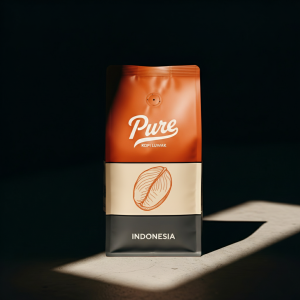
Pure Kopi Luwak
Wild civet coffee from Java. 88.5 SCA cupping score. From $125 for 100g.
Java Is Where Kopi Luwak Was Born
This isn’t branding. It’s documented history.
Coffee arrived in Java in 1699, when Dutch colonial administrator Hendrik Zwaardecroon brought Arabica seedlings from Yemen to Batavia — now Jakarta. By 1711, the Dutch East India Company was shipping Java coffee to European markets, where it commanded prices approaching one percent of the average annual wage per kilogram. Java was, at that time, the only place outside Arabia and Ethiopia producing coffee at commercial scale.
Then came the practice that would eventually become kopi luwak. In the 19th century, farmers in central Java — many of whom were prohibited from harvesting coffee for personal use under colonial law — began collecting coffee cherries from the droppings of wild Asian palm civets that roamed their plantations. They cleaned, roasted, and brewed those beans. What they discovered was a cup with unusual smoothness and complexity. The practice spread. The legend began.
Kopi luwak is a Javanese invention. The Gayo Highlands of Aceh produce excellent coffee — but the civet processing tradition that defines this category was developed and refined on Javanese soil, by Javanese farmers, over more than a century before it became an international phenomenon.
The Terroir Argument: Volcanic Java vs. Sumatran Highland
Terroir — the French winemaking concept of “place” — matters enormously in coffee, and it matters in a specific way for kopi luwak. Civet digestion doesn’t erase the character of the base bean. It transforms and concentrates it. Which means the starting material is everything.
Java’s premier coffee-growing regions sit atop some of the most geologically active terrain on Earth. The Ijen Plateau in East Java is part of the Ijen volcano complex, a group of stratovolcanoes rising to 2,769 metres above sea level. The volcanic soil in this zone is mineral-rich and exceptionally well-drained — conditions that push coffee plants to develop deeper root systems, concentrate sugars in the cherry, and produce beans with pronounced, structured flavour.
The Tengger massif, home to the iconic Bromo volcano, produces coffee at similar elevations, with cool temperatures and consistent cloud cover contributing to slow cherry development. Slower development equals more complexity. It’s the same principle at work in high-altitude Bourbon from Rwanda or Gesha from Panama.
Gayo Arabica, grown in the Gayo Highlands of Aceh, is legitimately excellent coffee in its own right — typically wet-hulled using the Giling Basah process, which produces a heavier body, lower acidity, and earthy, full-flavoured cup. These are real qualities. But “heavy body” and “low acid” are not universally superior traits — they are stylistic preferences. In the context of kopi luwak, where the digestive process already reduces bitterness and moderates acidity, starting with an already low-acid base can result in a cup that leans toward flatness rather than depth.
Java’s naturally structured, mineral-driven Arabica has more room to evolve through civet processing. The result isn’t just smooth — it’s dimensional.
What the Rankings Actually Measure
The “Gayo #1” claim circulating online typically traces back to aggregate review platforms that score regional coffee styles based on user and critic input. It’s worth understanding what those rankings are actually measuring.
Gayo Arabica as a coffee origin — the beans grown in the Gayo Highlands and processed conventionally — is genuinely well-regarded by the specialty coffee community. It has won awards. It has a Geographical Indication (GI) designation. The rankings reflect that reputation.
But kopi luwak is not a bean variety. It is a processing method. Ranking “Gayo kopi luwak” against “Java kopi luwak” using reviews of Gayo Arabica broadly is like ranking a Burgundy winemaker’s talent based on how good Burgundy Pinot Noir is in general. The conclusion doesn’t transfer cleanly.
What distinguishes excellent kopi luwak specifically — the quality of the wild civet’s cherry selection, the care in collection and processing, the altitude and microclimate of the source farm — is not captured by aggregate scores of a coffee region’s general output.
When connoisseurs evaluate kopi luwak on its own terms, the conversation is far more nuanced than any ranking suggests.
Try the coffee this article is about
Wild-sourced from Java, 88.5 SCA cupping score, free US shipping. From $125 for 100g.
Shop Pure Kopi Luwak →Smooth vs. Complex: The Connoisseur’s Distinction
The appeal of “smooth” coffee is real. Low acidity, rounded body, no rough edges — for many drinkers, that’s the ideal. And kopi luwak from any good origin delivers that, because civet digestion inherently reduces bitterness by beginning the germination process within the bean, breaking down storage proteins and altering amino acid composition.
But in premium food and drink, “smooth” is rarely the highest compliment. It describes the absence of something — sharpness, tannin, astringency — rather than the presence of complexity.
Consider the parallel in whisky. A blended Scotch is, by design, smooth. The rough edges have been averaged out. A well-aged single malt from Islay or Speyside is not smooth in the same way — it has peat, fruit, oak, mineral character, and a finish that evolves over minutes. Experts who know what they’re looking for reach for the single malt.
Or wine: a commercially produced Merlot is easy, smooth, inoffensive. A Premier Cru Burgundy may have higher acidity, firmer tannins, and require years in the glass before it opens up. The sommelier chooses the Burgundy.
Java kopi luwak, at its best, carries this kind of complexity. Drinkers consistently report layers of dark chocolate, ripe stone fruit, subtle spice, and a clean, mineral-edged finish that lingers. That’s what volcanic terroir, slow cherry development, and wild civet selection produces when the processing is done right. It is not merely smooth — it is complete.
Wild Sourcing: The Ethical Imperative
One dimension that transcends the Java-versus-Gayo debate entirely is the question of wild versus caged production — and here, Java has a meaningful story to tell.
As international demand for kopi luwak grew, many producers across Indonesia shifted to keeping civets in battery cages and force-feeding them coffee cherries. This is now the dominant production method globally, and it represents a fundamental corruption of what kopi luwak is supposed to be. Caged civets, fed a forced mono-diet, do not exercise the selective foraging behaviour that defines the category. A civet that cannot choose which cherry to eat cannot produce the same result as one that roams freely through a forest, selecting only the ripest, most aromatic fruit by instinct.
Java’s kopi luwak tradition, at its best, maintains the integrity of wild collection. The island’s remaining forested coffee-growing regions — particularly around the volcanic highlands — support wild civet populations whose natural behaviour has never been replaced by industrial methods. That’s not true across the board, of course. Scrutiny is always warranted. But the foundation is there.
When you choose genuinely wild Java kopi luwak, you’re choosing the original method, the original terroir, and the original standard — before the practice was industrialised. That distinction isn’t a marketing angle. It’s the whole point.
Frequently Asked Questions
Is Java kopi luwak better than Gayo kopi luwak?
For drinkers who prioritise complexity and terroir-driven character, Java kopi luwak offers something Gayo cannot: the original home of the tradition, volcanic soil at high elevation, and a base Arabica with the structural range to evolve meaningfully through civet processing. Gayo produces excellent coffee, but “smooth and earthy” is not the ceiling of what kopi luwak can be.
Why is Java considered the birthplace of kopi luwak?
The practice of collecting and brewing coffee from civet droppings originated among Javanese farmers in the 19th century, under Dutch colonial rule that restricted their access to the coffee they cultivated. This was documented practice long before Gayo or any other Indonesian region became associated with kopi luwak. Java’s primacy is historical, not promotional.
Does the origin region really affect kopi luwak flavour?
Yes — significantly. Civet processing transforms the base bean; it doesn’t replace it. The terroir of the source coffee — its altitude, soil mineralogy, varietal, and processing — is preserved and amplified through digestion. Java’s volcanic highlands produce a distinctly different base than Sumatra’s wet-hulled Gayo Arabica, and that difference is legible in the cup.
How can I tell if kopi luwak is genuinely wild-sourced?
Look for specificity: named origin (farm, region, altitude), transparent sourcing narrative, and a price point consistent with genuine wild collection — which is inherently limited in volume. Vague “wild-sourced” claims without supporting detail are a warning sign. Authentic wild kopi luwak exists in small quantities; producers who can tell you exactly where and how it was collected are the ones worth trusting.
Pure Kopi Luwak
Wild civet coffee from Java. 88.5 SCA cupping score. From $125 for 100g.
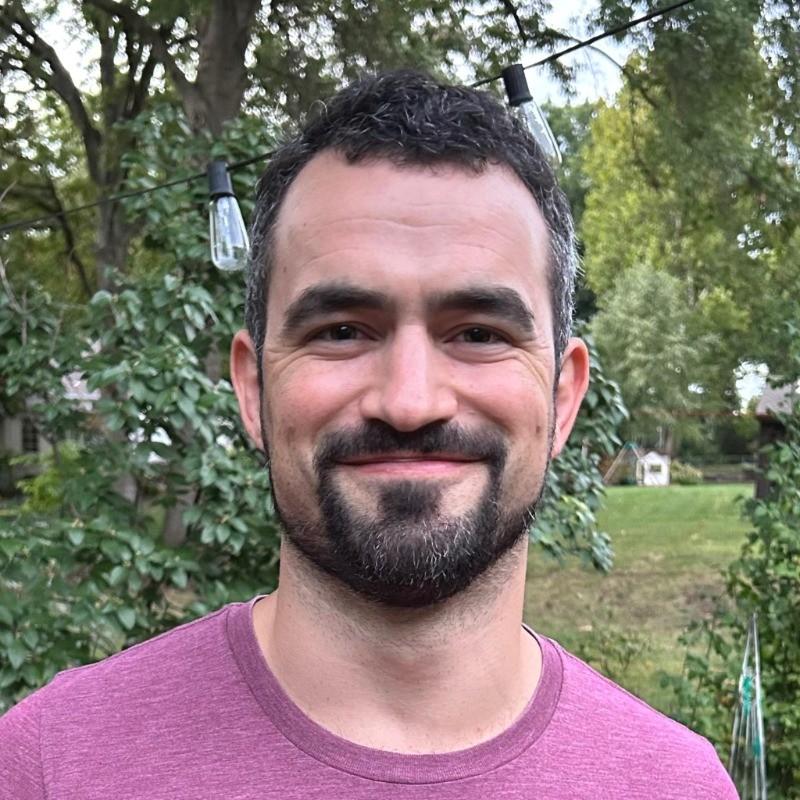
Roger Abbott founded Pure Kopi Luwak in 2018 after a trip through the volcanic highlands of Java, and has bought from the same farming families ever since. He only works with collectors of wild civet coffee, never caged. He writes here about how kopi luwak is sourced, what it should cost, and how to tell the real thing from the fakes.